Home

Kindergarten Activity No. 51 : Counting Words in a Sentence


Counting words in a sentence, known as sentence segmentation, is a phonological awareness activity. Phonological awareness is the ability to listen to the sounds in a word. Phonological awareness prepares children for reading and writing. Teaching children to hear the words in a sentence is the first step in phonological awareness. It makes children aware that a sentence is made up of words.

Since this activity focuses on phonological awareness, it is important not to show the written sentences to the children.


For this activity you need:

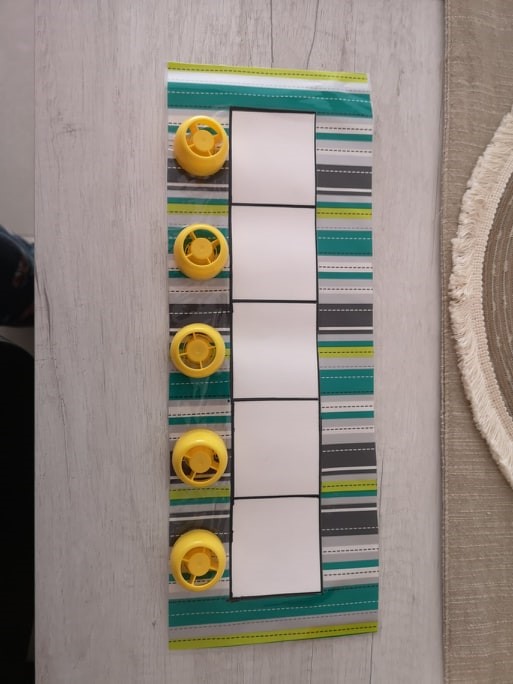
  • A 5 square strip of paper (you can make it from a piece of cardboard paper or from a cereal box).

 

  • For counting you can use either bottle caps, buttons, counters, or circle cut outs.

 Instructions:

  1. Put the counters on the board and tell your child that each counter represents a word.
2. Explain to your child that you are going to say a sentence twice. Emphasise the importance of listening carefully.

Say a simple sentence, for example: “The dog runs”.


3. Tell your child that you are going to say the sentence again. Say the words in the sentence clearly, while making sure to pause after each word. This time s/he must repeat the sentence after you while putting a counter, onto the square on the grid, for each word s/he says.

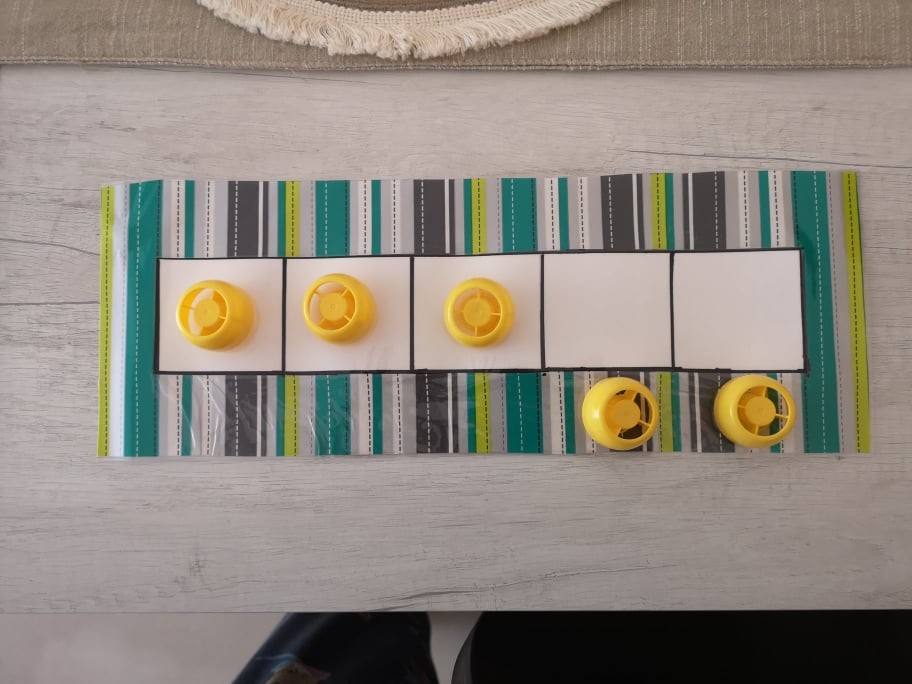
While saying – ‘The dog runs’, your child should put three counters on the grid.
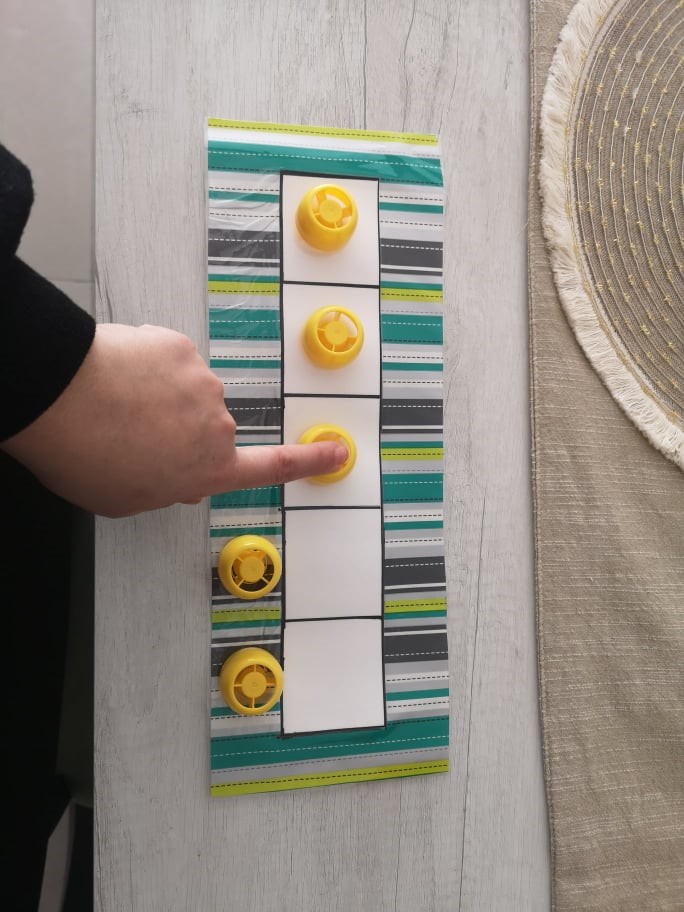
4. When finished repeat the sentence together. While saying the sentence point to the counters one a time.

5. Ask your child: “How many words does this sentence have?”

The child should say: “3”
Note:

  • Start this activity with short sentences, then gradually increase the length of the sentences.
  • Have the child place the caps from left to right, as this will help for directionality.


Variation: The child can also clap or stomp the words in a sentence. Say the complete sentence and then encourage him/her to repeat the sentence while clapping or stomping for each word. This activity can also be done while reading story books.

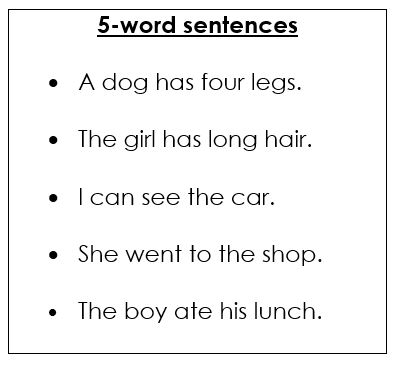
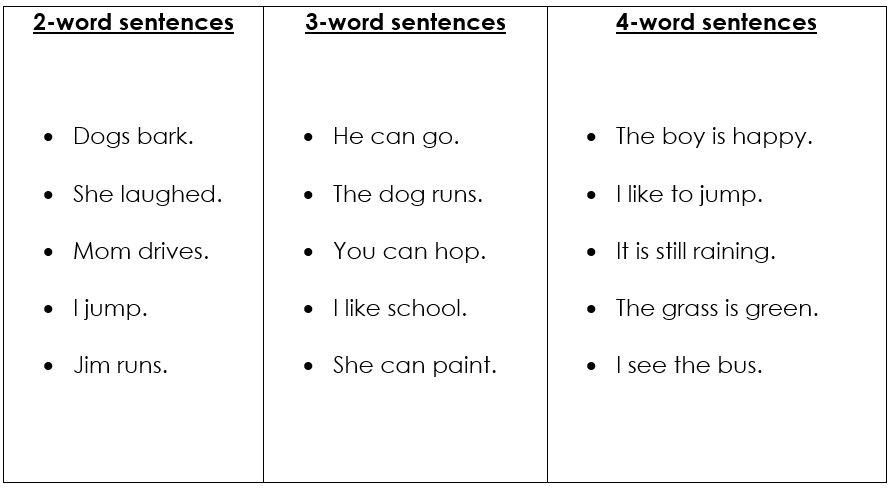
Example of sentences to use
Ms Rodianne

K2.1


Kindergarten Activity No. 50 : Fejn qed tisma’ l-ħoss tal-ittra?

Fejn qed tisma’ l-ħoss tal-ittra

Huwa importanti ħafna li t-tfal jitgħallmu jidentifikaw fejn ikunu qed jisimgħu l-ħoss ta’ ittra partikolari f’kelma. Din il-ħila se tgħinhom għal meta jiġu biex jaqraw u jiktbu.

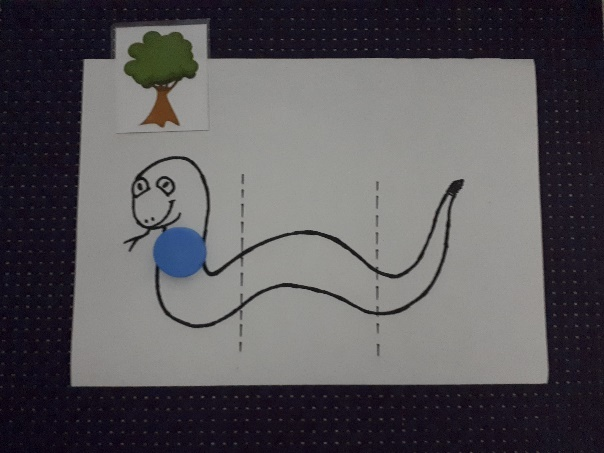
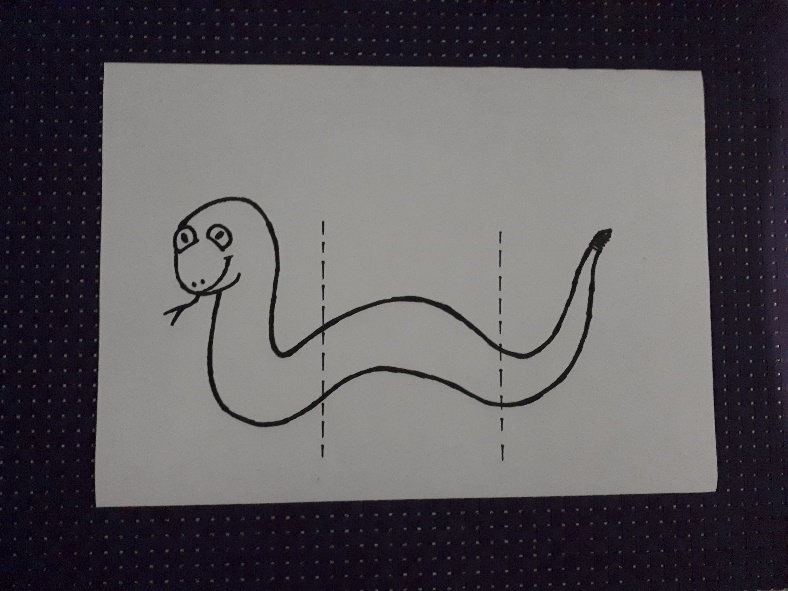
Il-ħoss tal-ittra jista’ jkun kemm fil-bidu, fin-nofs jew fl-aħħar tal-kelma. Minħabba li hu kunċett astratt, ħafna drabi t-tfal ma jkunux jistgħu jifhmu fejn qed jisimgħu l-ħoss tal-ittra. Għaldaqstant, biex ngħinu lit-tfal jifhmu aħjar, l-iskola nużaw stampa ta’ serp. Din l-attività sempliċi tgħin lit-tfal jifhmu dan il-kunċett.

Meta jisimgħu l-ħoss tal-ittra fil-bidu tal-kelma, it-tfal iridu jmissu b’idejhom ras is-serp.  Meta jisimgħu l-ħoss tal-ittra fin-nofs tal-kelma, iridu jmissu ż-żaqq.  Waqt li meta jisimgħu l-ħoss tal-ittra fl-aħħar tal-kelma, imissu d-denb. B’hekk lit-tfal nkunu qed ngħinuhom jifhmu, b’mod konkret, fejn jinsab il-ħoss. Vantaġġ ieħor ta’ din l-attività hi li tgħin lit-tfal isaħħu l-ħila tas-smigħ.

Għal din l-attività għandek bżonn:

  • Stampa jew tpinġija ta’serp.
  • Stampi ta’ kliem bi tliet ittri jew aktar stampa ta’ vit, rota, siġra, eċċ.
  • Marker
  • Tappijiet tal-fliexken tal-ilma.


Qabel tibda l-logħba:

  • Ipprintja jew pinġi stampa ta’ serp fuq karta.
  • Aqsam is-serp fi tliet partijiet billi tpinġi żewġ linji: ras is-serp; żaqq is-serp; u denb is-serp. (Ara l-istampa t’hawn taħt).

  • Spjega u ddiskuti mat-tifel jew tifla li kelma hi magħmula minn 3 partijiet: il-bidu, in-nofs u l-aħħar. Uri s-serp u spjega li dan is-serp huwa bħall-kliem: maqsum fi tlieta. Ras is-serp huwa l-bidu. Żaqq is-serp huwa n-nofs. Waqt li denb is-serp huwa l-aħħar.


Ibda l-logħba:

  1. Agħżel stampa ta’ kelma, eż. stampa ta’ siġra.
  2. Uri l-istampa lit-tifel/tifla.
  3. Staqsi lit-tifel/tifla: “Din x’inhi?”

It-tifel/tifla irid/trid iwieġeb/twieġeb: “siġra”

  1. Għid il-kelma (eż. ‘siġra’) waqt li tmexxi subgħajk fuq is-serp, mix-xellug għal-lemin.  Poġġi subgħajk fuq ras is-serp u mexxi subgħajk minn fuq rasu għal fuq denbu waqt li tgħid il-kelma.
  2. Ħeġġeġ lit-tifel/tifla j/tagħmel l-istess.
  3. Issa, agħżel ittra minn dik il-kelma (eż: /s/  minn siġra). It-tifel/tifla irrid/trid j/tisma’ l-ittra li inti għażilt u j/tgħidlek jekk hijiex fil-bidu, fin nofs jew fl-aħħar tal-kelma. L-aħjar li tibda bil-ħoss fil-bidu tal-kelma sakemm it-tifel/tifla j/tidra. Imbagħad  għaddi għall-ħoss fl-aħħar tal-kelma. Il-ħoss tan-nofs huwa l-iktar wieħed diffiċli, għaldaqstant ħallieh għall-aħħar.


Staqsi lit-tifel/tifla: “Fejn qed tisma’ l-ittra /s/? Fil-bidu tal-kelma (miss ras is-serp), fin-nofs tal-kelma (miss żaqq is-serp) jew fl-aħħar tal-kelma (miss denb is-serp)?”


            It-tifel/tifla irid/trid iwieġeb/twieġeb: “Fil-bidu tal-kelma” (Filwaqt li jmiss/tmiss ras is-serp).


Tista’ tuża tappijiet tal-ilma kif qed tara f’dawn l-istampi. It-tifel/tifla irid ipoġġi/tpoġġi t-tapp fuq ras is-serp għall-ħoss fil-bidu tal-kelma; fuq żaqqu għall-ħoss fin-nofs tal-kelma; jew fuq denbu għall-ħoss fl-aħħar tal-kelma.

Eż. Is-/s/ f’siġra – fil-bidu (ras is-serp)

Is-/s/ f’pasta – fin-nofs (żaqq is-serp)

Is-/s/ f’qattus – fl-aħħar (denb is-serp)


Ms. Jessica

K2.5

Kindergarten Activity No. 49 : One-to-One Correspondence

Aim:  Understanding one-to-one correspondence

This is an early mathematical skill.  This skill involves counting an object once while touching it.  While touching the object the children should say the number out loud. This basic Mathematics skill will help children to gain the ability of counting.

These videos will help you understand better what one-to-one correspondence is.

https://www.youtube.com/watch?v=gtO7SGUlbJg

https://www.youtube.com/watch?v=k9dlnaEzCl4

Activity: Counting food for animals

For this game you need:

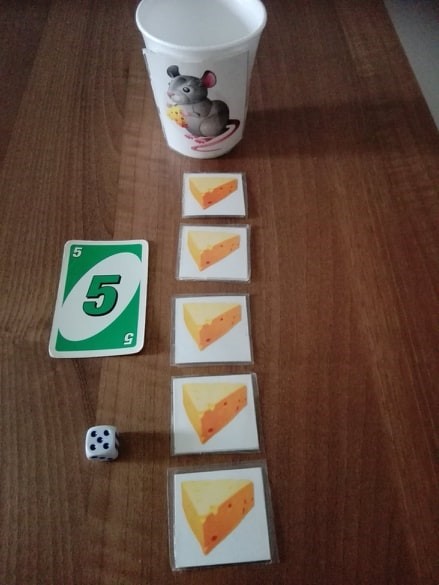
  • dice (1 dice to count from 1-6)
  • number cards (you can use Uno cards or make your own)
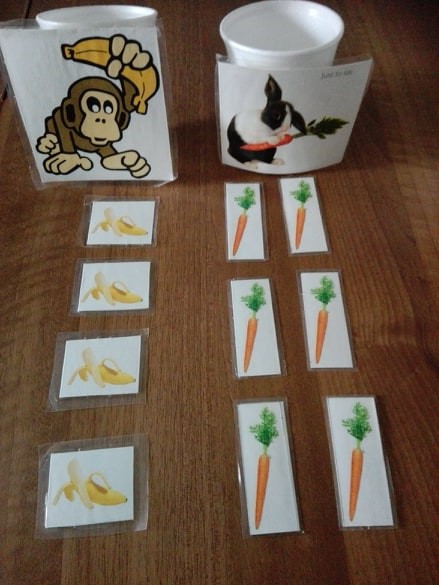
  • pictures of animals (I printed a mouse, a rabbit, and a monkey)
  • animal food cards (in this case cheese, carrots, and bananas)
  • empty cups
  • scotch tape (to stick the animal picture card to the cup)


How to play this game:

  1. Choose a cup with an animal on it. And pick the cards of the correct food for that animal.
  2. Roll the dice and count the dots on the dice by pointing on each dot while saying the number out loud. Start by doing it yourself so that your child understands what s/he must do.
  3. After rolling the dice, and counting the dots on the dice, find the number card that matches the number. For example, if the number on the dice is five, find the card with the number 5 on it. Encourage your child to find the corresponding number card as this promotes number recognition.
  4. Ask your child to put the correct amount of food in the cup. Encourage him/her to put one picture at a time while counting aloud.

Repeat the activity with all the animals. After feeding them you can extend the activity by asking your child questions like:

  1. Which animal has the most food?
  2. Which one has the least?
  3. Are there any animals with equal/same amount of food?

This will also help your child to compare different amounts and understand number value. You can play this game several times.


Online games for your child:


Game 1: Give teddy some cakes

https://www.topmarks.co.uk/learning-to-count/teddy-numbers


For games no.2 and no.3 please follow the link below, then click on counting and choose ‘Counting Out’. Click on either 1-5 or 1-10, depending on your child’s ability.

Game 2: Put spots on the ladybird

https://www.topmarks.co.uk/learning-to-count/ladybird-spots


Game 3: Put buttons on the Gingerbread man

https://www.topmarks.co.uk/learning-to-count/gingerbread-man-game


Ms. Pauline

Kinder 1.3