Kindergarten Activity No. 56 : All About My Mum

All about my Mum


Getting to know those who are close to us is important.  Spending time with our family helps us to get to know each other better. When we spend time together, we learn about our personal interests and how to respect and tolerate each other. One important way a child learns of his/her self-worth is through his/her interactions with his/her family. When we give quality time to our family, we create a bond and give our children a strong sense of belonging and security. Create opportunities at home in which all the family can engage in.

Below is an activity that will serve as an icebreaker to help your child get to know you better.

How to play this game:

  1. Print the  document all about mum (see link below). This document contains picture cards which your child can use as prompts to ask questions about you. (If you don’t want to print the cards you can draw your own). The cards will help your child ask you questions about your:
  • Favourite colour
  • Favourite sports
  • Favourite lipstick colour
  • Favourite food
  • Favourite shop
  • Favourite drink
  • Favourite TV programme
  • Favourite shoes
  • Favourite song
  • Favourite book
  • Favourite dress
  • Favourite fruit

The cards have no words written on them.  Pictures are an important part of learning how to read as they introduce the child to reading.  While asking you questions about your favourite things your child will be building his/her vocabulary skills and sentence structure.

To print the document all about mum use this link:

all about mum

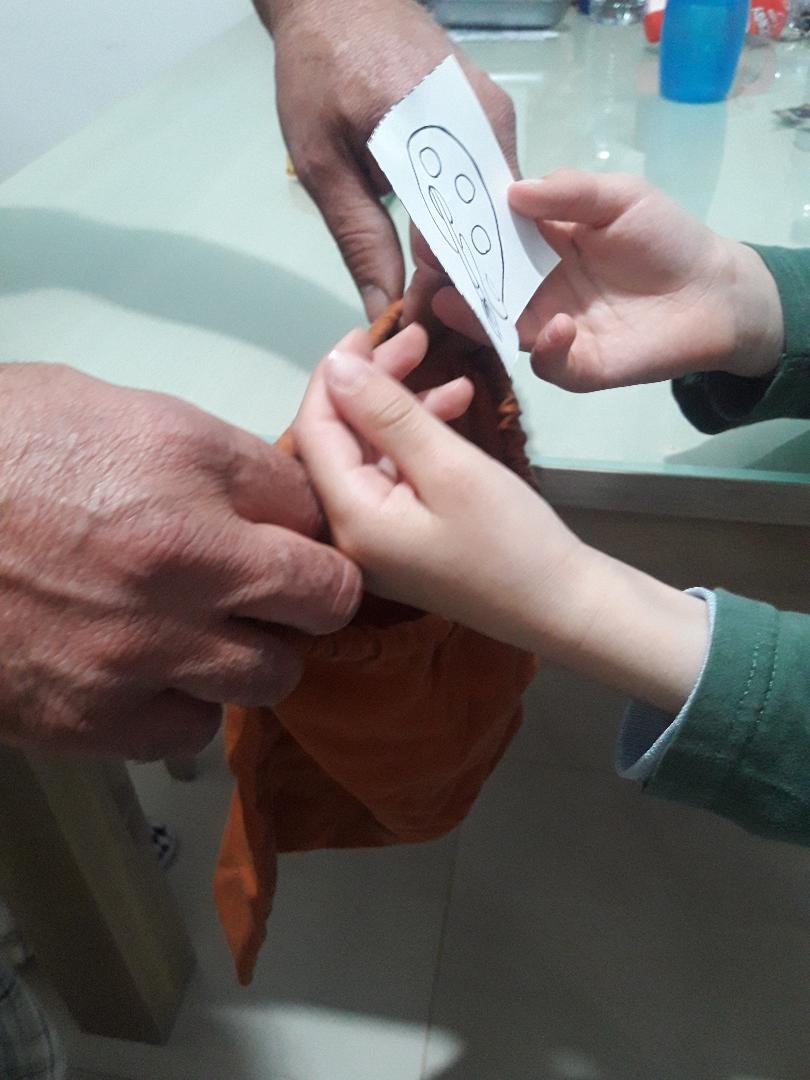
After printing the cards, cut along the dotted line, fold the cards in half and put them in a bowl or in a sack.
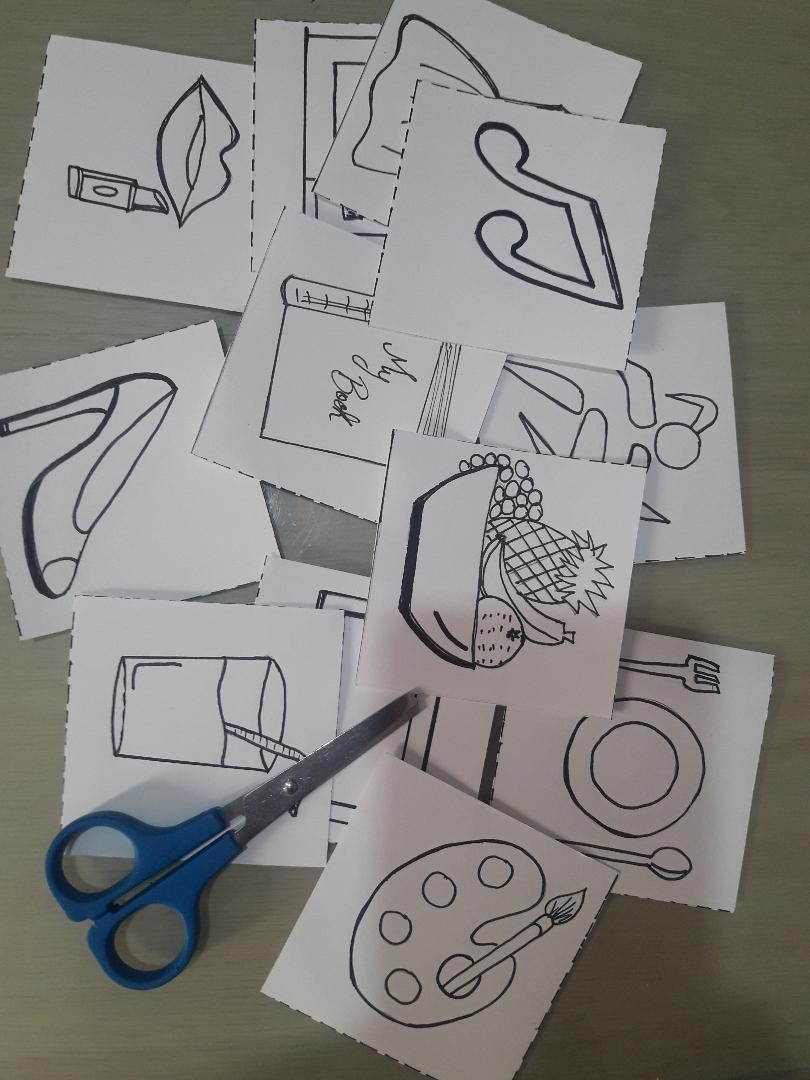
Now let the fun begin; let’s find out who knows mum well! Start the game by asking your child to put his hand in the bowl or sack and take a card. Ask him to unfold the card and ask you a question (depending on the picture on the card). For example, if the picture s/he picked is a bowl of fruit your child has to ask you: “What is your favourite food?”


Apart from getting to know you better, this activity will help your child think, observe, and enhance his vocabulary.  If your child does not ask the question correctly, rephrase it and encourage him/her to repeat it. Give full answers and describe why you like that particular thing.  This will help children enhance their language skills.
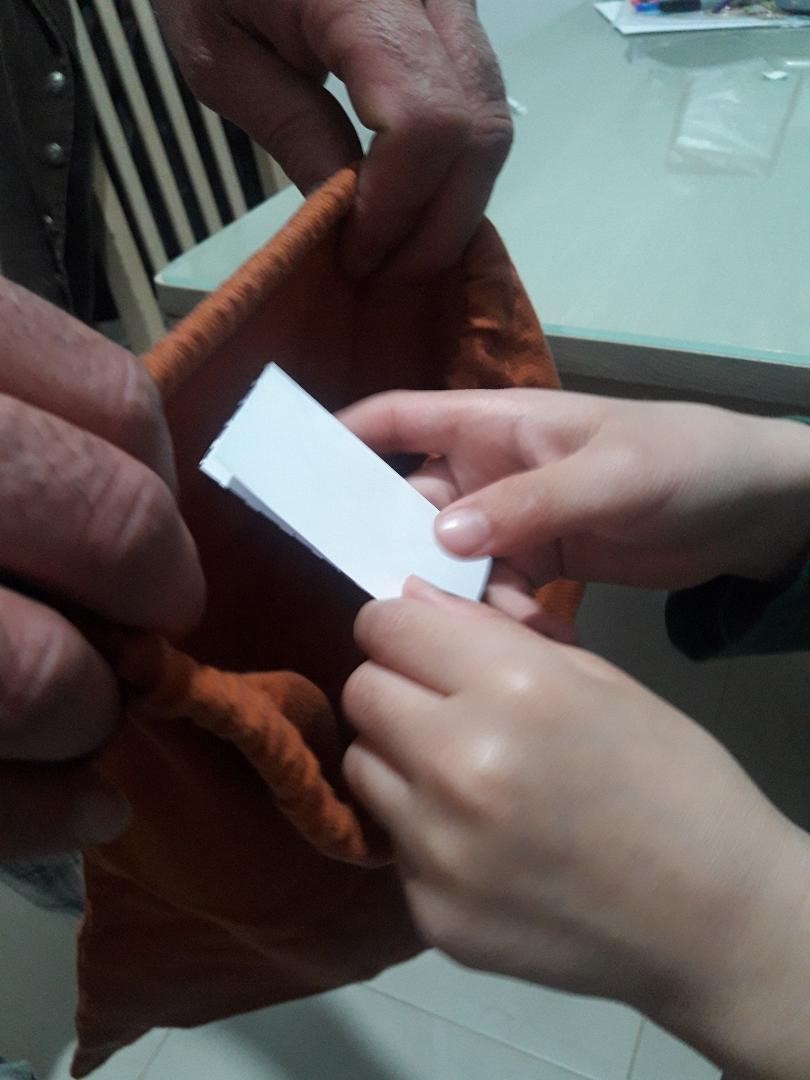
Why not try this activity with other family members? Focus on the fact that we are all beautiful and unique. Enjoy!


Ms Marita Cachia

k2.3
Kindergarten Activity No. 55 : Bingo

Bingo Games

Bingo shapes and numbers games are a great way for children to:

  • learn about shapes
  • reinforce their number recognition skills
  • develop their counting skills
  • enhance their matching skills.


These games will also help children reinforce their:

  • visual perception
  • concentration
  • critical thinking ability (which enhances cognitive development).

Bingo Games: Shape Bingo and Number Bingo


For these bingo games you need:

  • A print-out of the bingo sheets. (Click on the below link for the sheets) If you laminate them they will last longer

 bingo

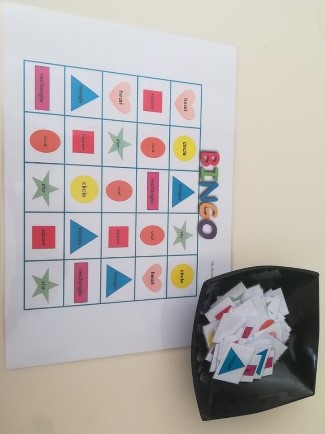
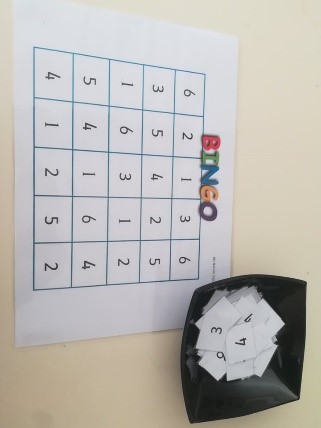
  • A print-out of the call sheets. (After printing the call sheets cut them into shape and number cards and put them into a bowl, as indicated in the picture).

Game 1: Bingo Number Game

How to play this game:

  1. Draw a number card from the bowl.
  2. Give your child the card. S/he must say the number on the card and place it on a matching number on the bingo board.


As soon as your child covers all the squares on the bingo board s/he should shout: “BINGO !!!”

Game 2: Bingo Shape Game


How to play the game:

This game is played as the Bingo Number Game.

  1. Draw a shape card from the bowl.
  2. Give your child the card. S/he must say the name of the shape on the card and then place it on a matching shape on the bingo board.


As soon as your child covers all the squares on the bingo board s/he shouts: “BINGO !!!”

Game 2: Bingo Shape Game

Here is a you tube video showing an adult playing shape bingo with a group of children:

https://www.youtube.com/watch?reload=9&v=5DesuChSZe0&feature=youtu.be&fbclid=IwAR2PdL9ZR3DbAJ0J2Rjn9BVosact5UVsEFWfGp3QUnSKRcYPn1nnY7HPRwY


Variation:  To make Bingo Number Game more challenging you can use dice.

How to play the game:

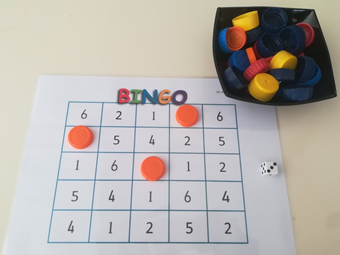
  1. Ask your child to roll the dice and count the number of the dots on the face of the dice and say the number, for example 3.
  2. Your child has to cover all the squares on the board that have the number 3 on them. (As indicated in the picture).


As soon as your child covers all the squares on the bingo board s/he shouts: “BINGO !!!”


These bingo games can be played in small groups, in pairs or individually.


Ms.Natalie Agius K 1.6


Kindergarten Activity No. 54 : Symmetry

The following activities will help children to be able to identify objects/shapes that are symmetrical and to copy patterns to achieve symmetry.

What is symmetry?

An object that has symmetry can be divided into identical pieces.  An object that has reflectional symmetry is like a mirror image. At this stage it is not important that the children know the word reflectional symmetry. They must understand the concept of symmetry. One example of mirror image symmetry is a butterfly. When a butterfly folds its wings, it is easy to see that the wings are the same on both sides.


Activity 1:

For this activity you need:  a piece of paper, some paint, and a brush.

This simple artwork will help children understand symmetry easily.

  • Fold a piece of paper in half.


  • Give your child some paint and a brush.


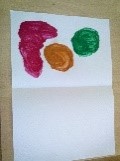
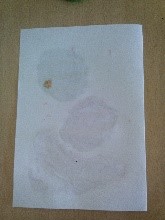
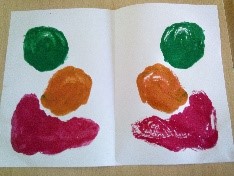
  • Ask him/her to paint something s/he likes on one side of the paper only. (As indicated in the picture)

  • Before the paint dries, fold the paper in half and press.

  • Open the paper to reveal the print. Point out to your child that what s/he painted on one side of the fold is now visible on the other side of the fold.

You can follow this video https://www.youtube.com/watch?v=042uDqg2k3g to complete the above activity.


Activity 2:

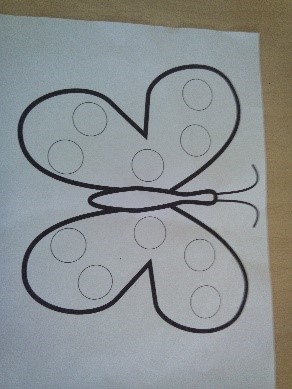
For this activity you need:  a print-out of the butterfly and some coloured pompoms of the same size.

Explain to your child that to achieve symmetry s/he needs to copy the pattern exactly as it is.

  • Print the butterfly to show your child how symmetry can be achieved. click here for printout: butterfly print-out

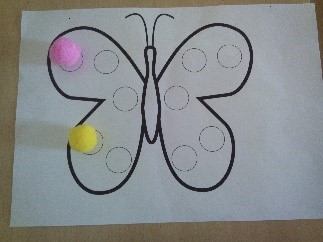
  • Take the pompoms. Make sure you have 2 pompoms of each colour.


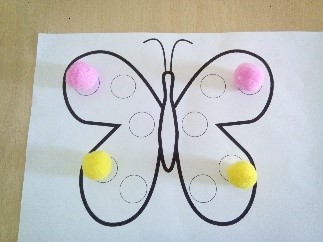
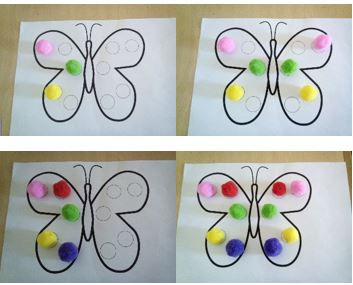
  • Place one or two pompoms on one side of the butterfly. Ask your child to copy the pattern on the other side. (As indicated in the pictures).

  • Increase the number of pompoms gradually.

Following is an online game. In this game your child must complete a picture by finding the other symmetrical half.

https://www.topmarks.co.uk/symmetry/symmetry-matching


Ms Maria

K1.5