For these learning activities use any bottle caps available at home including fruit pouch caps and jar lids.
Colour sorting
This activity helps children to make and create groups/sets.
Colour pieces of paper according to the colour of bottle caps available. Place the coloured paper on different plates or in a sorting tray (as seen in picture) and encourage your child to sort the coloured bottle caps accordingly.
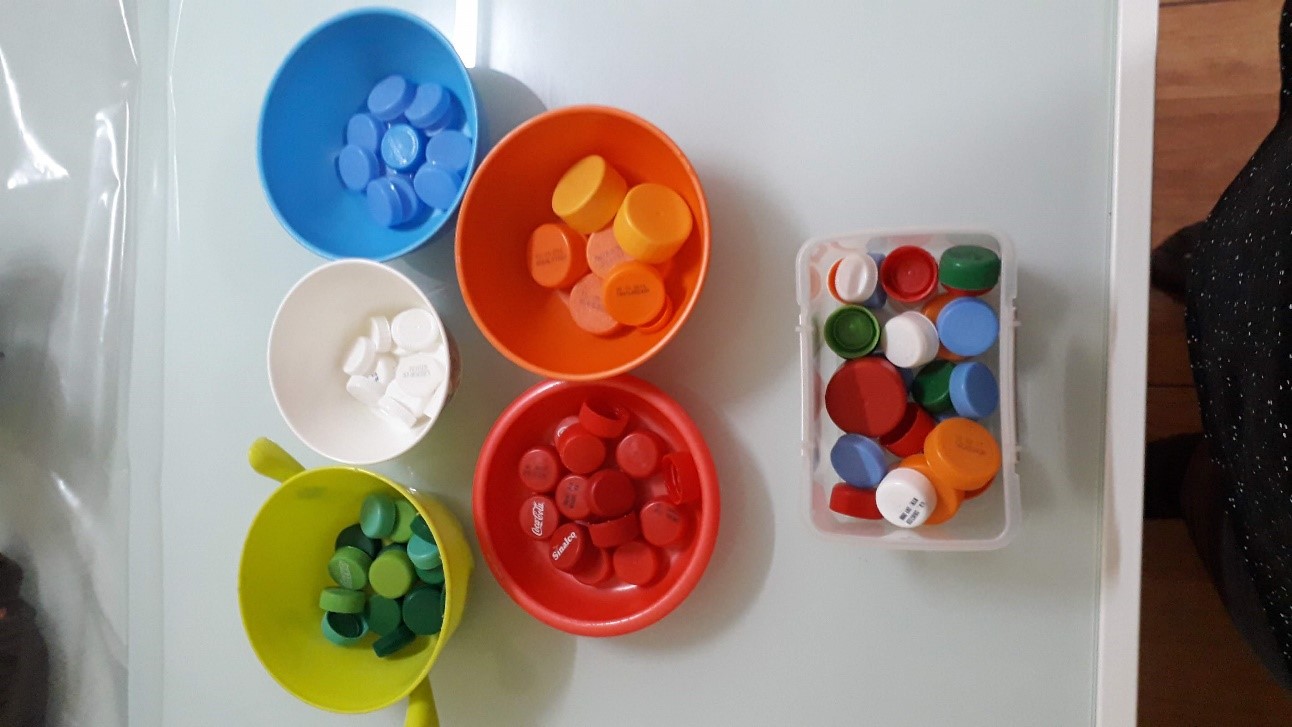
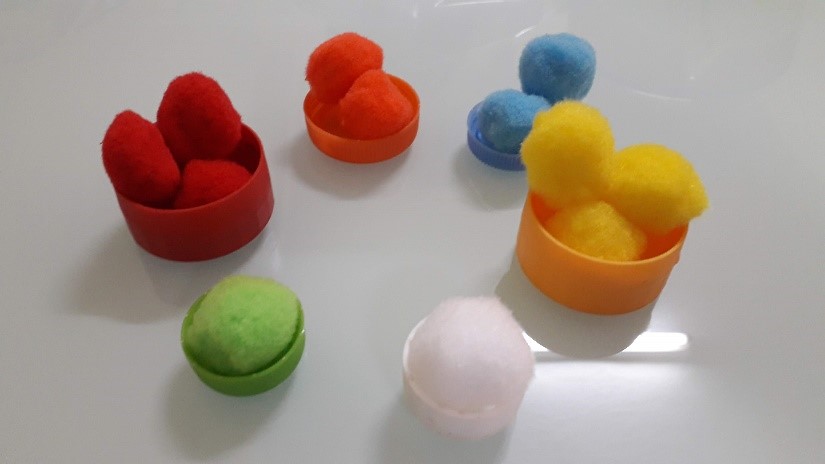
Alternatively, use pompoms/ coloured buttons and sort according to the colour of the bottle cap.
Measuring
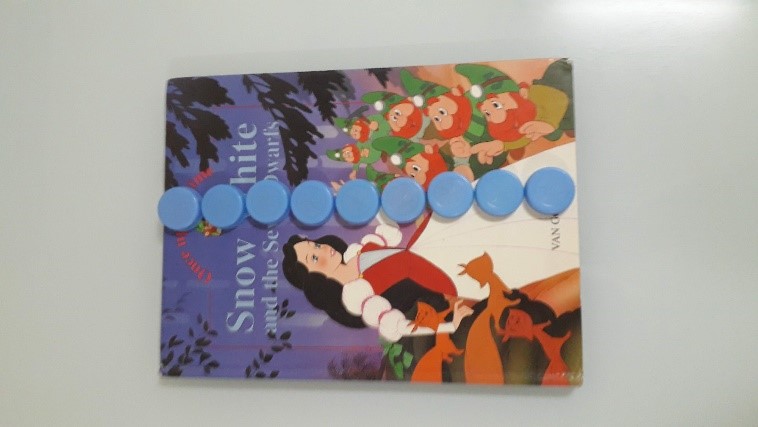
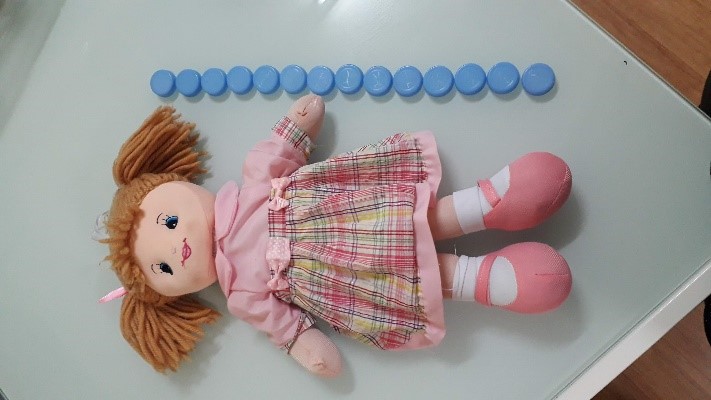
Use the bottle caps as a non-standard unit of measure. You can measure how long is a doll, a book etc. (as seen in picture).
How many bottle caps long is the book, the doll, my foot, etc.?
It is important to use same sized caps when measuring. This activity helps to develop the vocabulary of measurement and comparison, using terms such as shorter, taller, bigger, and smaller.
Stacking
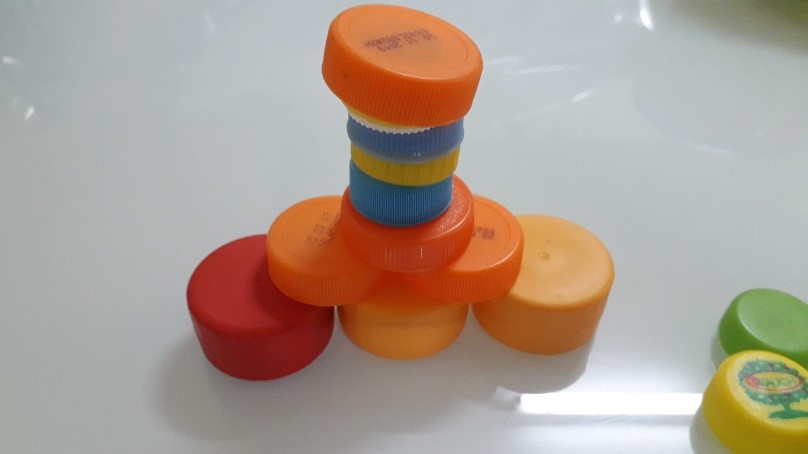
This activity is beneficial because it develops hand-eye coordination and enhances logical thinking capability. Try stacking caps.
How many caps can you stack?
Encourage your child to count. You can also count in Maltese (wieħed, tnejn, tlieta etc.).
Check if it is easier to stack caps of different sizes or caps of the same size. Experiment using both same size and different sized bottle caps.
Making patterns
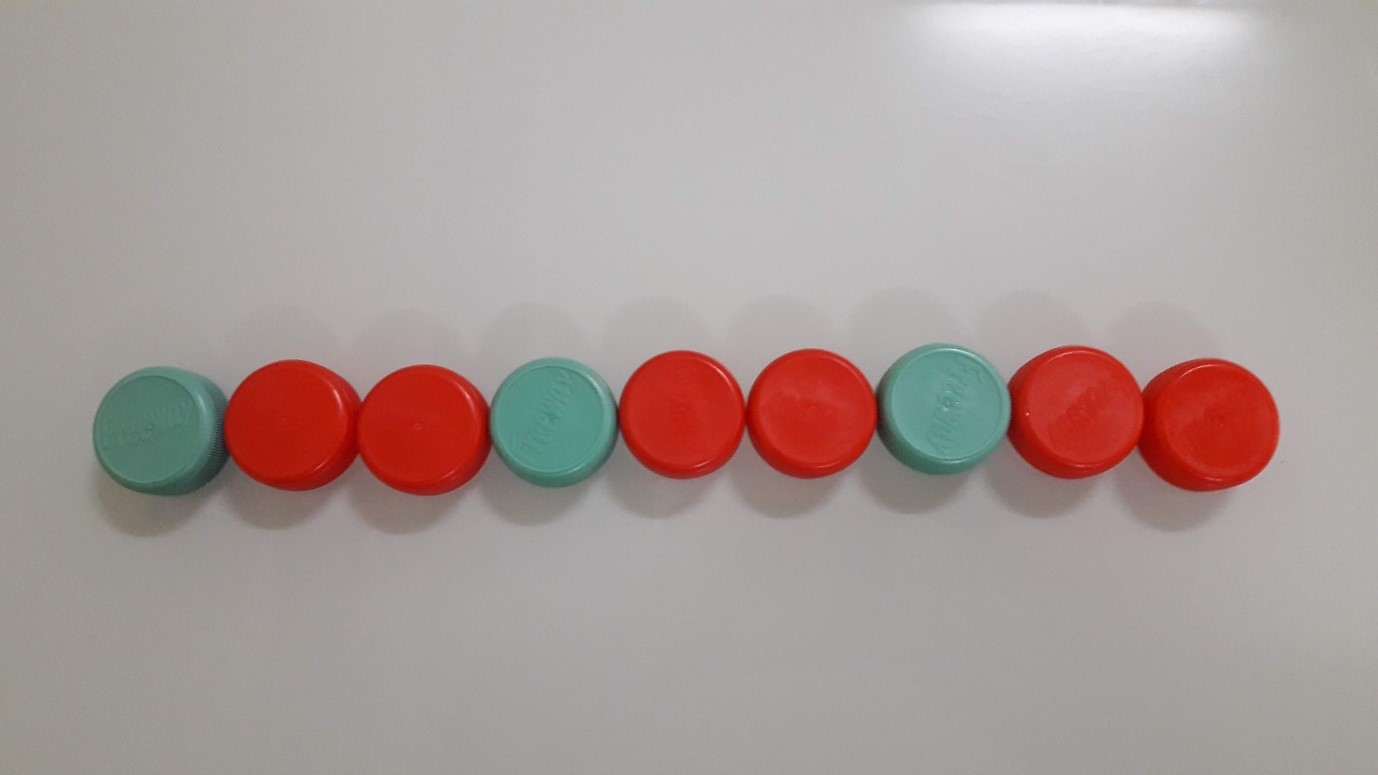
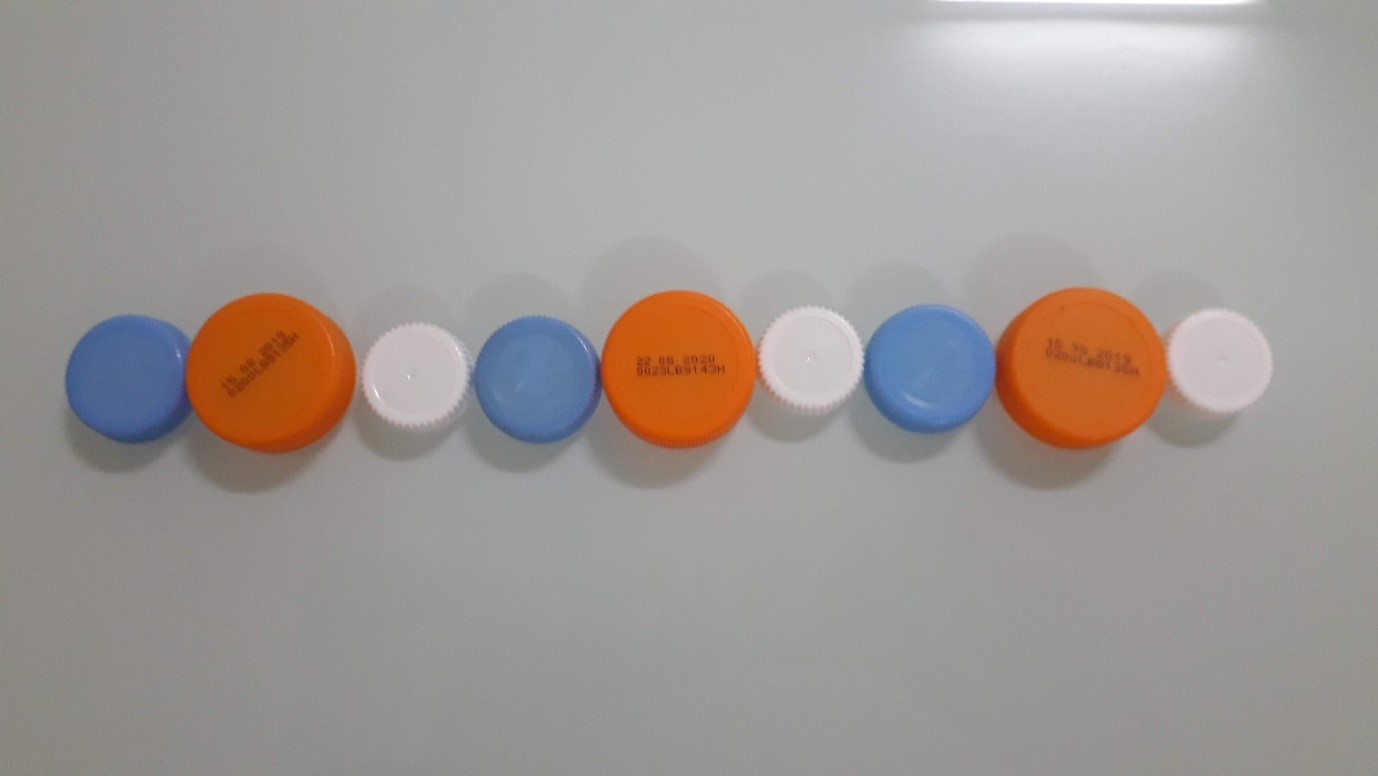
Patterns help children learn sequencing and make predictions. There are many different levels to teaching and learning pattern skills, here is the developmental sequence for teaching patterning skills to your child.
Stage 1: Recognize a pattern
Stage 2: Describe a pattern
Stage 3: Copy a pattern
Stage 4: Extend a pattern
Stage 5: Create a pattern

Imaginative / Sensory play
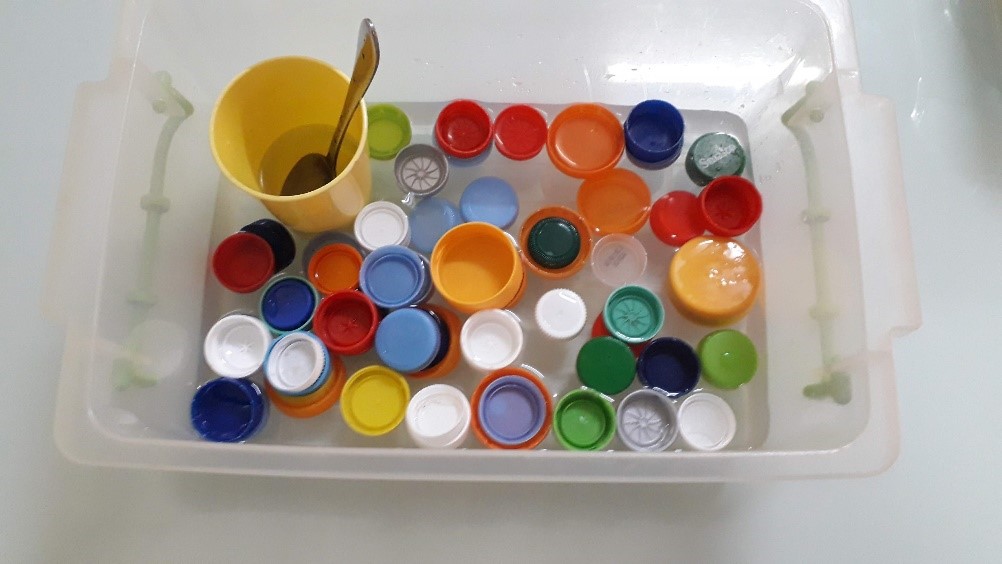
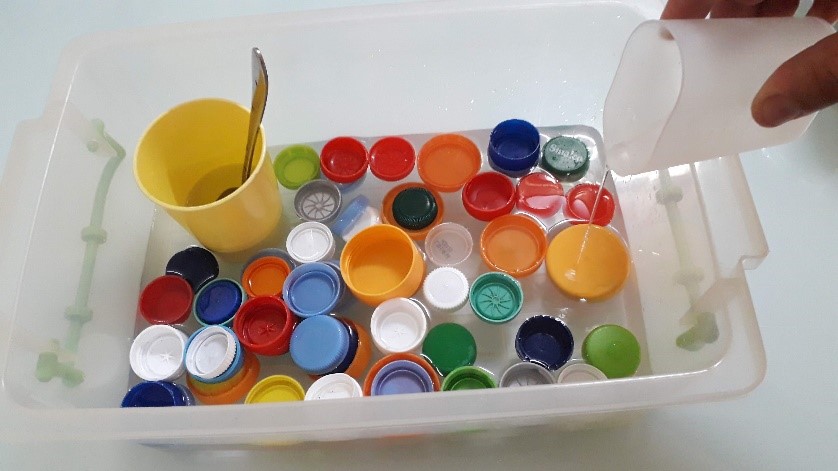
Fill a large basin with bottle/fruit juice caps, play kitchen utensils: spoons, cups, pots, pans and plastic cups. Water is optional but adds to the fun! There is no need for guidance during imaginative play, as children are quite creative! Imaginative play is beneficial in all areas of the child’s development and encourages them to learn through play.
Ms Nikita K1.9
 St Ignatius College, Patri Ġużè Delia, Siġġiewi Primary