
Kindergarten Activity No 46: Yoga for children

Multiple benefits of Yoga for children
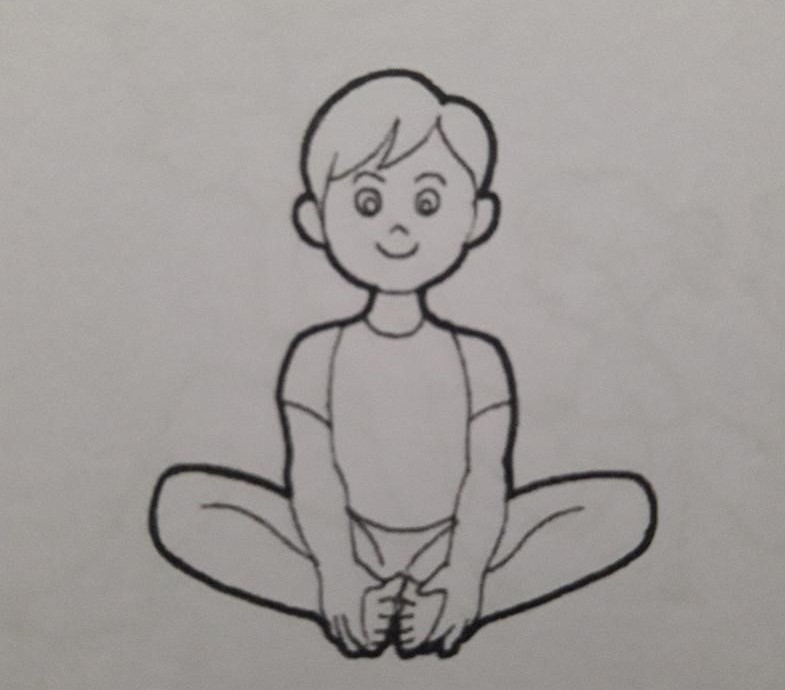
 

The benefits of yoga go beyond just exercise. Right now, we are living a stressful situation.  This might be influencing our children negatively and could be leaving an impact on their innate happiness.  Yoga exercises can help them ease this pressure. Yoga has multiple benefits for children.

  • Yoga postures strengthen children not only physically but also mentally.
  • Breathing exercises during yoga improve their energy levels.
  • Yoga improves their behaviour and self-regulation.
  • Yoga improves co-ordination and balance, while developing awareness of their body.
  • Yoga increases confidence.


Here are some links to guide you in this journey, enjoy, Namaste.


https://www.youtube.com/watch?v=X655B4ISakg


https://www.youtube.com/watch?v=C4CaR0syf1g


https://www.youtube.com/watch?v=xlg052EKMtk


https://www.youtube.com/watch?v=T_0P5grVoyg


Act out stories

Creative story telling

Children love listening to stories.  While listening to stories they create original images in their mind. This stimulates their imagination. Find time to read stories, with exciting adventures, to your child and encourage him/her to act out the story while you are reading it. Leave him/her free to listen to the story and have fun with movement.


While reading your book discuss the characters in the story and encourage children to act out the characters, they can:

  • flap their wings like a butterfly,
  • balance on one foot like a flamingo,
  • walk like a crab,
  • pretend to be a seed,
  • walk like a bear with their hands and feet on the floor,
  • stomp their feet like an elephant,
  • stretch like a dog wagging its tail.


These are all yoga poses. You will be surprised how many actions turn out naturally and how similar they are to yoga poses.


During creative storytelling children practice listening skills and comprehension skills through physical activity.


Creating their own stories

You can invent a story yourself or encourage your child to invent his own. (Childen over the age of three can already invent stories of their own).


Choose topics your children find interesting such as dinosaurs, at the zoo, sea, outer space, in the jungle, a movie theme or a place you already visited. Children are motivated when they talk about their favourite themes. Help them expand the story by asking them questions to prompt their thinking.


Bring their stories to life by encouraging them to act it out and do yoga poses.


Ms Marita Cachia K2.3
Kindergarten Activity No. 45 – Listening and Following Directions Game

Do as I Say, Not as I Do!!

Aim of this game:

This game targets auditory processing skills, which help to build the skills that children need to learn to follow directions. Since this game requires the child to carefully listen rather than rely on visual cues, it teaches him/her to listen not just hear.  Giving full attention to the speaker and trying to understand the complete message being sent is an important skill. This is a skill that can be developed with practice.

How to play this game:

Tell your child that s/he should do the movements that s/he hears you say and ignore the movements that you do.

Give a verbal direction while doing a movement that does not match the direction at the same time. For example, say: “Clap your hands!” while you jump up and down.  The child should do as you say, that is clap his/her hands.

Give three or more directions at a time while doing three or more movements that do not match what you are saying. If your child has difficulty following three directions, give him/her two or one. This is just an example of some directions you can give:

  1. Say: “clap your hands”, while you touch your toes (your child should clap his/her hands).
  2. Say “jump up and down”, while you wave your hands in the air (your child should jump up and down).
  3. Say “rub your tummy”, while you turn around (your child should touch his tummy).

Listen carefully, move it, and laugh away J

Ms Graziella

K1.1

Kindergarten Activity No. 44 – Visual Memory

Visual Memory

What is visual memory?

Visual memory focuses on the child’s ability to recall visual information which s/he has seen. It contributes to the development of pre-reading and pre-writing skills, since, to be able to read or write a child has to recall the formation of the letters and their sequential order.

There are various visual memory activities that contribute to the development of visual memory skills. These include:

  • identifying the link between similar items
  • remembering items in pairs
  • recalling the position of an item in a picture
  • recalling numbers, shapes and patterns in a serial order


How many objects can you remember?

This activity will help boost children’s visual memory skills and concentration. The aim of this activity is to look at a number of objects for a few seconds, hide them and then try to remember as many objects as possible.

Resources:

  • a print-out of the handout found here: visual memory
  • or any other pictures (you can find these from magazines)

Activity:

  • Show your child the handout with the pictures and let him/her observe them for a few seconds.
  • Hide the pictures and encourage your child to remember as many objects as possible.
  • Record the number of objects your child remembers.
  • Repeat the activity and check how many items your child can remember each time.


Some children might find it difficult to recall a number of objects at once; start with a few objects and gradually add more, so that the child is not overwhelmed.

Ms Chanice

K 1.11