Kindergarten Activity No. 52 : Mother’s Day flower craft


A mother is like a flower; beautiful and unique.


As you all know next Sunday is Mother’s Day. Usually, at this time of the year, at school we prepare a craft for this special day.  Today I have prepared a flower craft for you to do with your child.

It is important that before you start doing this craft your child understands what Mother’s Day is.  Start by getting a calendar. Children are already familiar with the days of the week and months of the year since at school they do the calendar routine every morning.  Go through the months of the year and find May. Then go through the days of the week and find Sunday 10th May. Tell your child that this is a special day because it is Mother’s Day.

Explain that on Mother’s Day we thank our mother for all the things she does for us.  Tell your child that you are going to do a flower craft together for Mother’s Day.

This activity involves scissor cutting, tracing, painting, and gluing.  These activities contribute to the development of fine motor skills and hand eye co-ordination. Fine motor skills develop with practice and are important for handwriting.

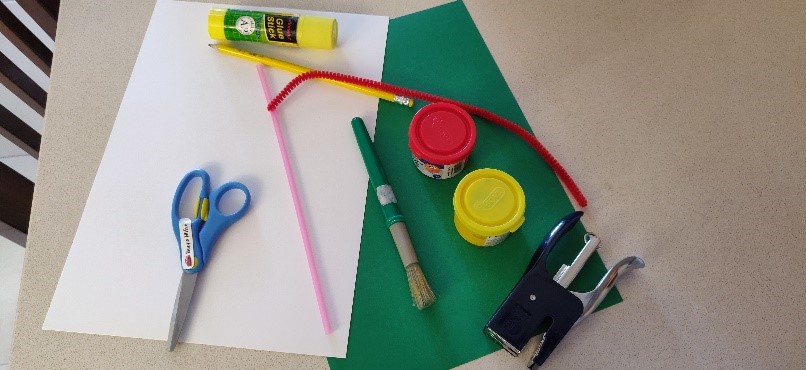
For this craft you need:

  • 1 white A4 cardboard paper
  • A piece of green cardboard paper for the leaves
  • A pencil
  • A pair of scissors
  • Paint (choose two different colours)
  • A paintbrush
  • 1 pipe cleaner
  • A Straw
  • Glue
  • Stapler

Method:

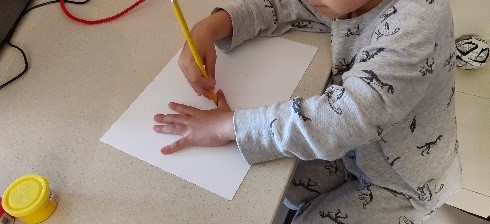
  • Encourage your child to trace his/her hand twice on the white A4 cardboard paper. Please note that some children might need help to do this.
 

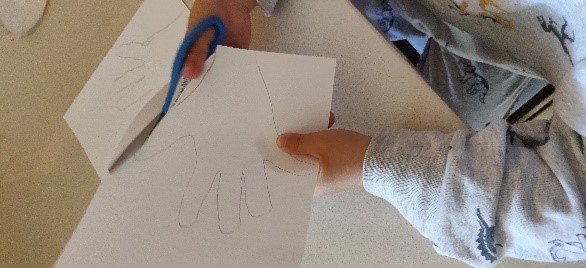
  • Encourage your child to use the scissors to cut the handprint out. Do not seek perfection.
 

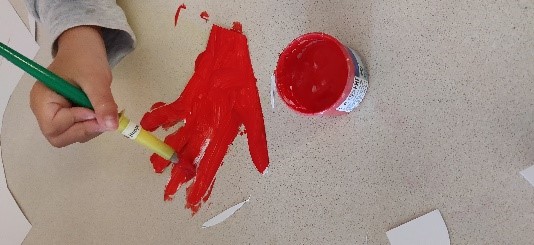
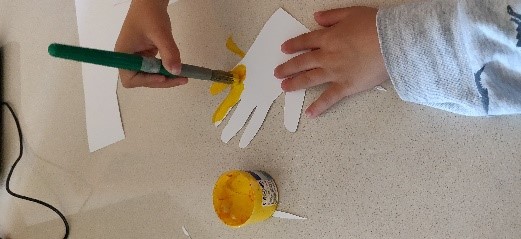
  • Ask your child to pick any two paint colours s/he likes to colour the handprints. If you are using one paint brush it is important that you clean the brush each time you change colour. Once the colour is dry, paint the other side of the handprint.
  • Help your child draw 2 leaves on the green paper. Alternatively, you can draw the leaves on a white paper and colour them. Use a pair of scissors to cut the leaves.
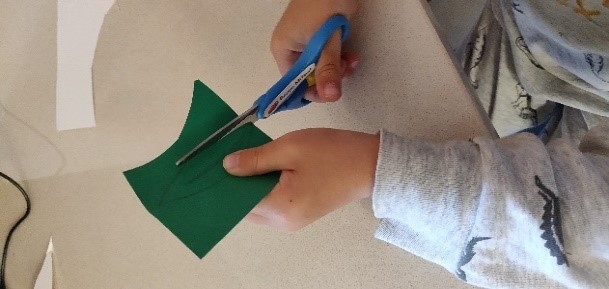
  • Once the paint is dry, take the handprints and put some glue on the palm of the each print.
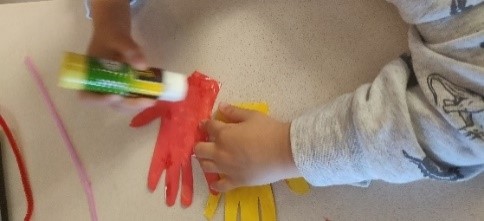
  • Take one handprint, fold it, and glue it together, leaving a space to insert the the straw. Then wrap the other handprint around the first handprint. Now insert the straw and press firmly. (As indicated in the picture).
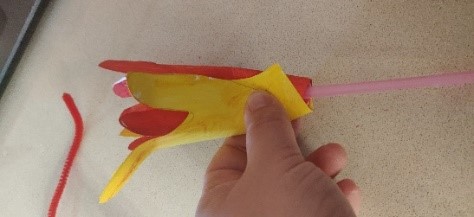
  • Ask your child to gently roll the finger tips outwards to form petals.
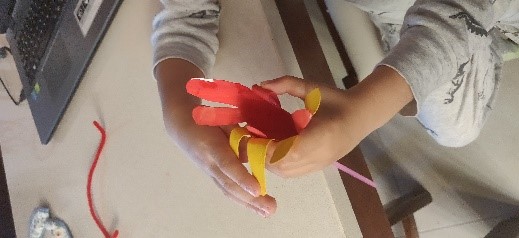
 

  • Glue the leaves to the straw, then turn the pipe cleaner around the straw to form a bow. You can staple the bow and the leaves to the straw in order to hold firmly. (As indicated in the picture)
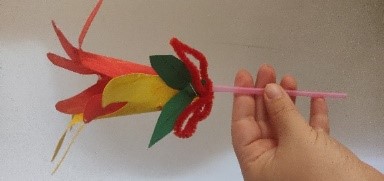
Dear children now you have a beautiful hand made flower to give to your mother. You can spray some perfume to make it smell as a real flower.

Hope you enjoyed it!

Attached you can also find a song you can sing to your super mummies on Mother’s Day.

https://www.youtube.com/watch?v=HL5GUuK49Ag

Happy Mother’s Day!

Ms Rosanne Mifsud

Kindergarten Activity No. 51 : Counting Words in a Sentence


Counting words in a sentence, known as sentence segmentation, is a phonological awareness activity. Phonological awareness is the ability to listen to the sounds in a word. Phonological awareness prepares children for reading and writing. Teaching children to hear the words in a sentence is the first step in phonological awareness. It makes children aware that a sentence is made up of words.

Since this activity focuses on phonological awareness, it is important not to show the written sentences to the children.


For this activity you need:

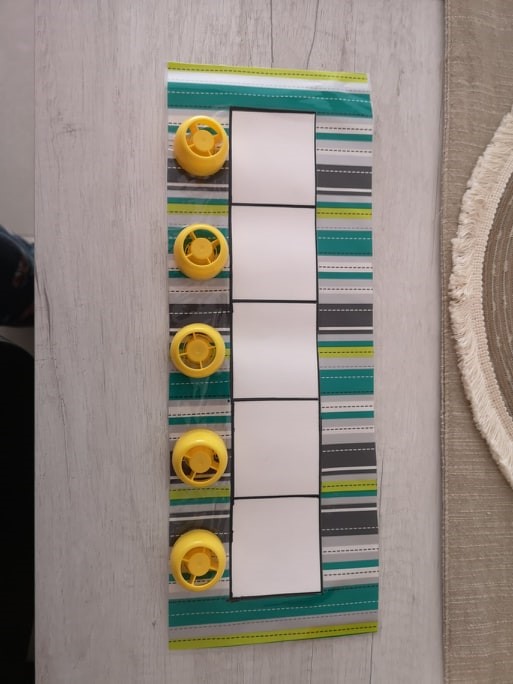
  • A 5 square strip of paper (you can make it from a piece of cardboard paper or from a cereal box).


  • For counting you can use either bottle caps, buttons, counters, or circle cut outs.

 Instructions:

  1. Put the counters on the board and tell your child that each counter represents a word.

2. Explain to your child that you are going to say a sentence twice. Emphasise the importance of listening carefully.

Say a simple sentence, for example: “The dog runs”.


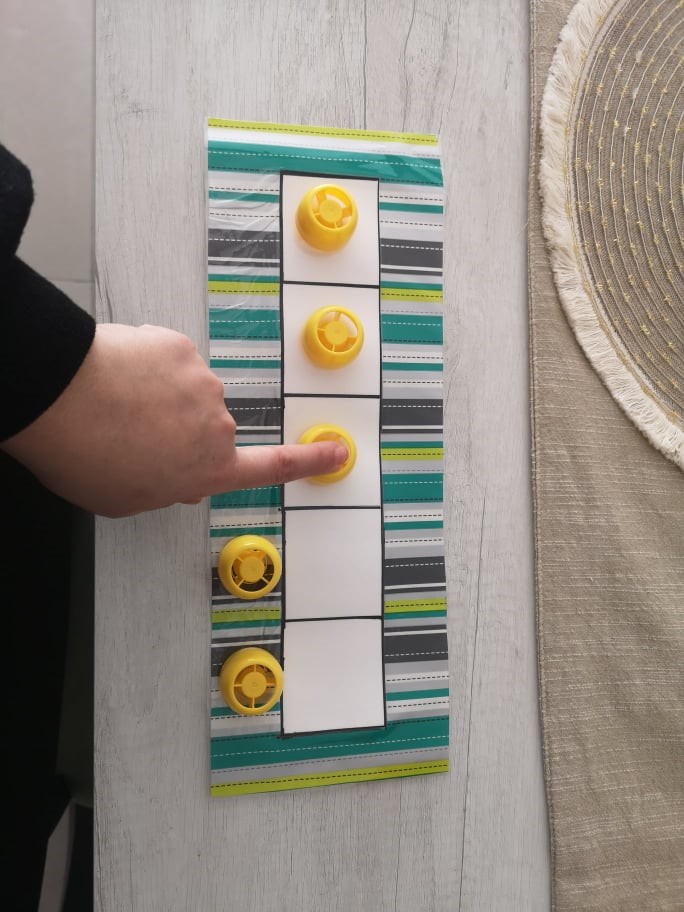
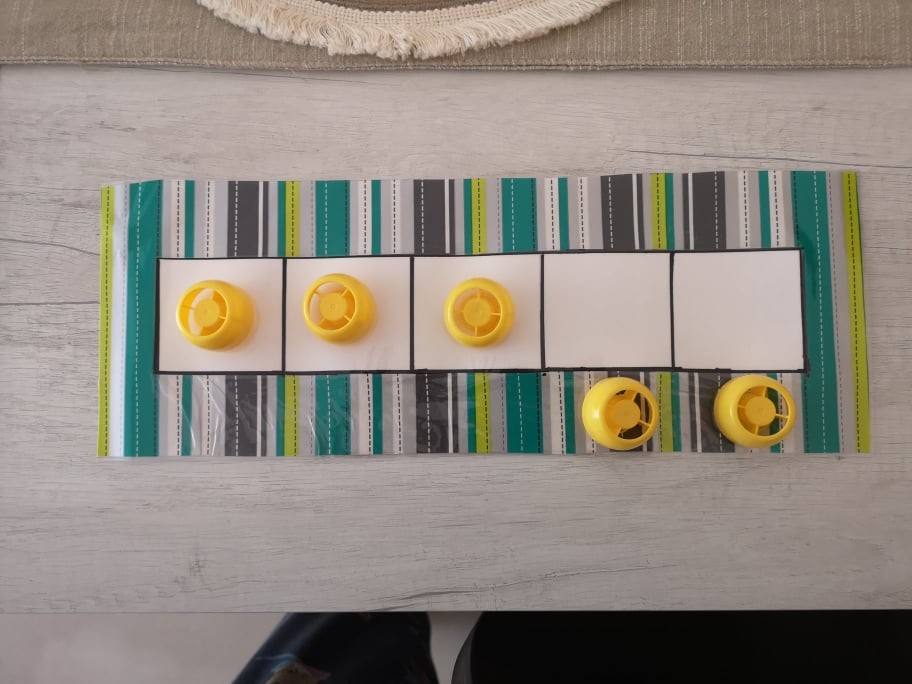
3. Tell your child that you are going to say the sentence again. Say the words in the sentence clearly, while making sure to pause after each word. This time s/he must repeat the sentence after you while putting a counter, onto the square on the grid, for each word s/he says.

While saying – ‘The dog runs’, your child should put three counters on the grid.

4. When finished repeat the sentence together. While saying the sentence point to the counters one a time.

5. Ask your child: “How many words does this sentence have?”

The child should say: “3”

Note:

  • Start this activity with short sentences, then gradually increase the length of the sentences.
  • Have the child place the caps from left to right, as this will help for directionality.


Variation: The child can also clap or stomp the words in a sentence. Say the complete sentence and then encourage him/her to repeat the sentence while clapping or stomping for each word. This activity can also be done while reading story books.

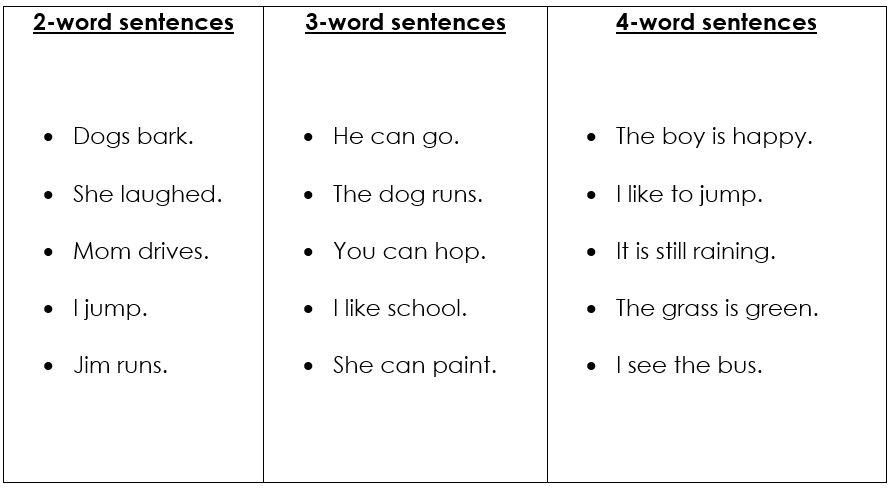
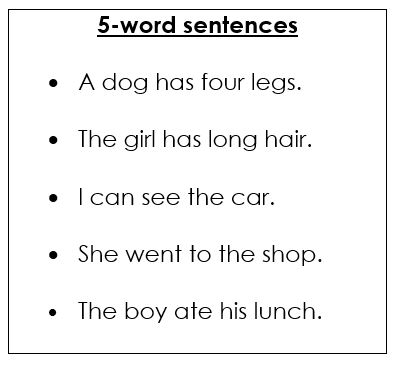
Example of sentences to use

Ms Rodianne

K2.1


Kindergarten Activity No. 50 : Fejn qed tisma’ l-ħoss tal-ittra?

Fejn qed tisma’ l-ħoss tal-ittra

Huwa importanti ħafna li t-tfal jitgħallmu jidentifikaw fejn ikunu qed jisimgħu l-ħoss ta’ ittra partikolari f’kelma. Din il-ħila se tgħinhom għal meta jiġu biex jaqraw u jiktbu.

Il-ħoss tal-ittra jista’ jkun kemm fil-bidu, fin-nofs jew fl-aħħar tal-kelma. Minħabba li hu kunċett astratt, ħafna drabi t-tfal ma jkunux jistgħu jifhmu fejn qed jisimgħu l-ħoss tal-ittra. Għaldaqstant, biex ngħinu lit-tfal jifhmu aħjar, l-iskola nużaw stampa ta’ serp. Din l-attività sempliċi tgħin lit-tfal jifhmu dan il-kunċett.

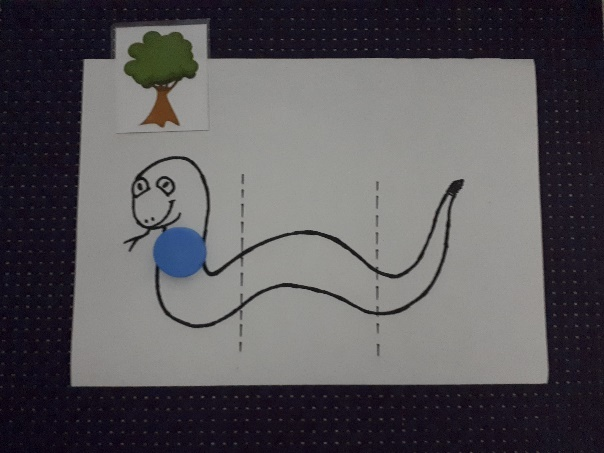
Meta jisimgħu l-ħoss tal-ittra fil-bidu tal-kelma, it-tfal iridu jmissu b’idejhom ras is-serp.  Meta jisimgħu l-ħoss tal-ittra fin-nofs tal-kelma, iridu jmissu ż-żaqq.  Waqt li meta jisimgħu l-ħoss tal-ittra fl-aħħar tal-kelma, imissu d-denb. B’hekk lit-tfal nkunu qed ngħinuhom jifhmu, b’mod konkret, fejn jinsab il-ħoss. Vantaġġ ieħor ta’ din l-attività hi li tgħin lit-tfal isaħħu l-ħila tas-smigħ.

Għal din l-attività għandek bżonn:

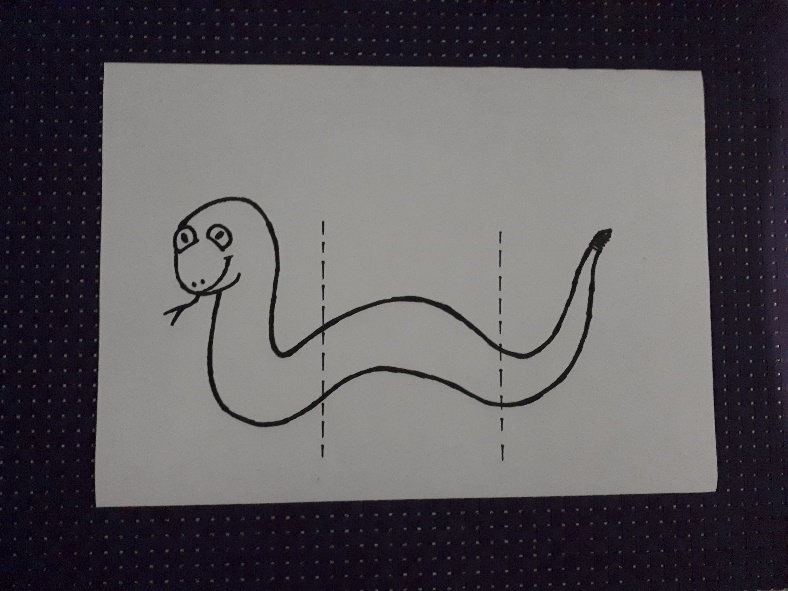
  • Stampa jew tpinġija ta’serp.
  • Stampi ta’ kliem bi tliet ittri jew aktar stampa ta’ vit, rota, siġra, eċċ.
  • Marker
  • Tappijiet tal-fliexken tal-ilma.


Qabel tibda l-logħba:

  • Ipprintja jew pinġi stampa ta’ serp fuq karta.
  • Aqsam is-serp fi tliet partijiet billi tpinġi żewġ linji: ras is-serp; żaqq is-serp; u denb is-serp. (Ara l-istampa t’hawn taħt).

  • Spjega u ddiskuti mat-tifel jew tifla li kelma hi magħmula minn 3 partijiet: il-bidu, in-nofs u l-aħħar. Uri s-serp u spjega li dan is-serp huwa bħall-kliem: maqsum fi tlieta. Ras is-serp huwa l-bidu. Żaqq is-serp huwa n-nofs. Waqt li denb is-serp huwa l-aħħar.


Ibda l-logħba:

  1. Agħżel stampa ta’ kelma, eż. stampa ta’ siġra.
  2. Uri l-istampa lit-tifel/tifla.
  3. Staqsi lit-tifel/tifla: “Din x’inhi?”

It-tifel/tifla irid/trid iwieġeb/twieġeb: “siġra”

  1. Għid il-kelma (eż. ‘siġra’) waqt li tmexxi subgħajk fuq is-serp, mix-xellug għal-lemin.  Poġġi subgħajk fuq ras is-serp u mexxi subgħajk minn fuq rasu għal fuq denbu waqt li tgħid il-kelma.
  2. Ħeġġeġ lit-tifel/tifla j/tagħmel l-istess.
  3. Issa, agħżel ittra minn dik il-kelma (eż: /s/  minn siġra). It-tifel/tifla irrid/trid j/tisma’ l-ittra li inti għażilt u j/tgħidlek jekk hijiex fil-bidu, fin nofs jew fl-aħħar tal-kelma. L-aħjar li tibda bil-ħoss fil-bidu tal-kelma sakemm it-tifel/tifla j/tidra. Imbagħad  għaddi għall-ħoss fl-aħħar tal-kelma. Il-ħoss tan-nofs huwa l-iktar wieħed diffiċli, għaldaqstant ħallieh għall-aħħar.


Staqsi lit-tifel/tifla: “Fejn qed tisma’ l-ittra /s/? Fil-bidu tal-kelma (miss ras is-serp), fin-nofs tal-kelma (miss żaqq is-serp) jew fl-aħħar tal-kelma (miss denb is-serp)?”


            It-tifel/tifla irid/trid iwieġeb/twieġeb: “Fil-bidu tal-kelma” (Filwaqt li jmiss/tmiss ras is-serp).


Tista’ tuża tappijiet tal-ilma kif qed tara f’dawn l-istampi. It-tifel/tifla irid ipoġġi/tpoġġi t-tapp fuq ras is-serp għall-ħoss fil-bidu tal-kelma; fuq żaqqu għall-ħoss fin-nofs tal-kelma; jew fuq denbu għall-ħoss fl-aħħar tal-kelma.

Eż. Is-/s/ f’siġra – fil-bidu (ras is-serp)

Is-/s/ f’pasta – fin-nofs (żaqq is-serp)

Is-/s/ f’qattus – fl-aħħar (denb is-serp)


Ms. Jessica

K2.5