Kindergarten Activity No. 64: How Many?

An Estimation Challenge Game for Kids

Estimating means finding a value which is close enough to the answer. We use estimation in everyday life, when shopping, when cooking or when trying to estimate time or distance. Estimation involves thinking, which means that when we are estimating, we are making a ‘thoughtful guess’. Children love guessing games. Through guessing games, we can help them learn how to make an estimation. Estimation enhances children’s problem solving and critical thinking skills.

IMPORTANT

  • Children are not born knowing how to estimate and may confuse quantity with size. Some jars might seem fuller because objects are bigger. Before starting the activity make sure they understand that they have to find out the quantity.
  • While doing the activity I encourage you to use Mathematics keywords such as: about, close to, almost and approximately.
  • Mathematics is used in every area of our lives, all the time! Estimating is a math skill we use in everyday life. It has to be taught by practising and reasoning.


Estimation activity

For this activity you need:
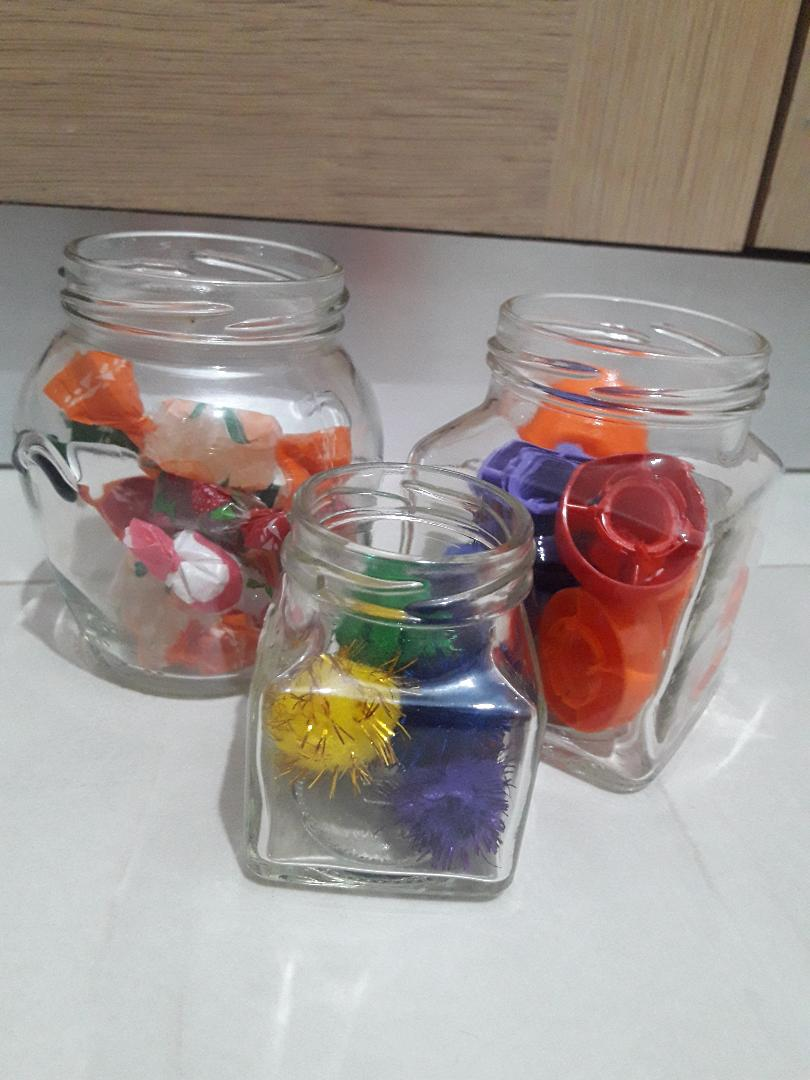
 

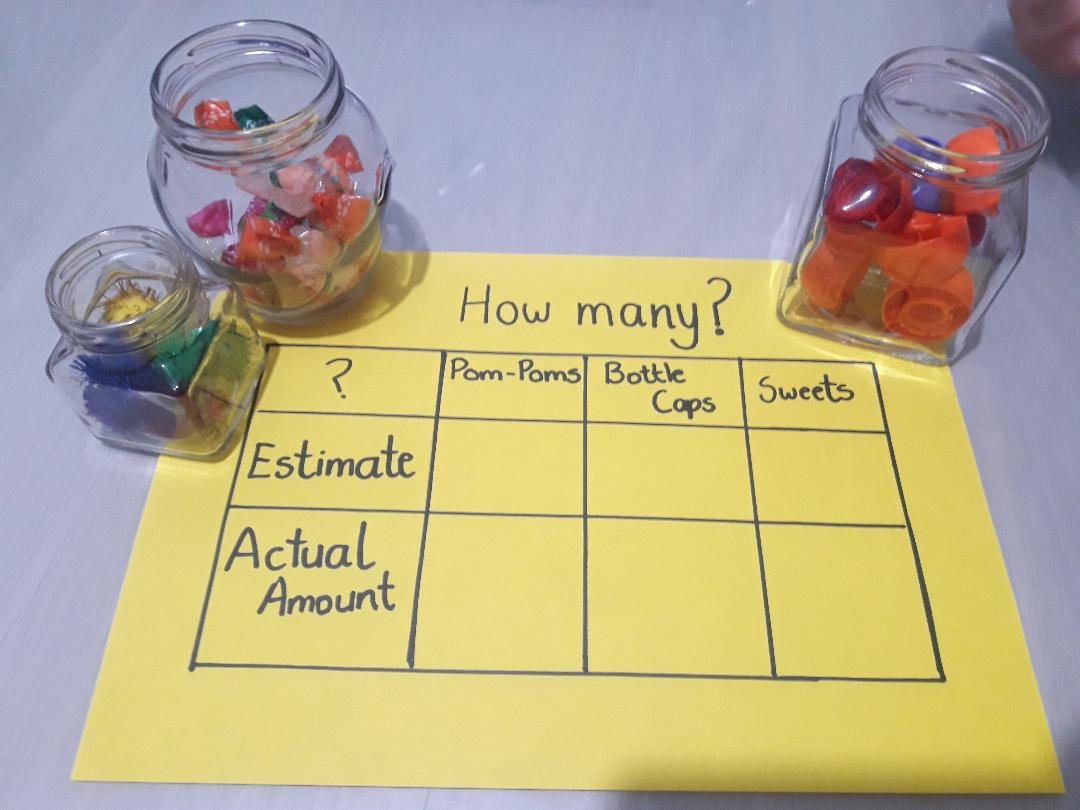
  • Transparent glass jars or any other transparent containers.
  • Up to 20 (depending on your child’s ability) small objects you can find from around the house. These might include rocks, bottle caps, pompoms, Lego blocks, paperclips, dried pasta, cotton balls, balloons, corks, magnetic letters, crayons, and small toys.
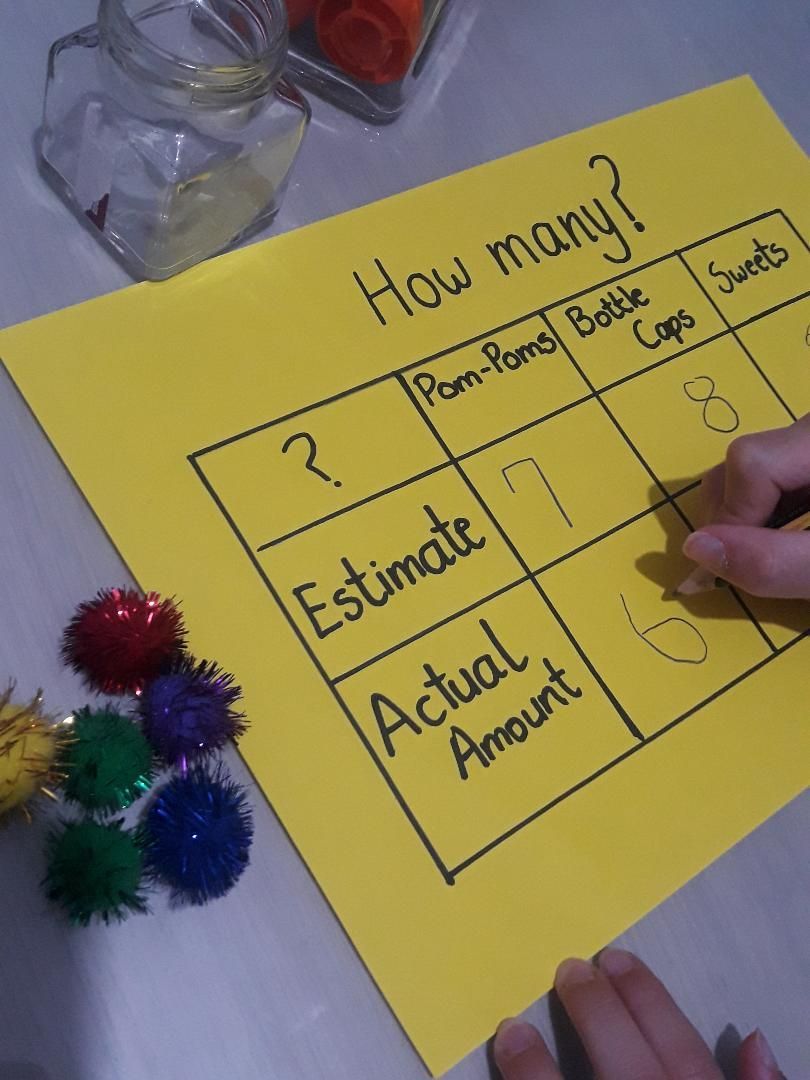
  • ‘How Many’ record sheet. (You can do one yourself as shown in the picture).

  1. Start by filling the jars with the small objects you found. Make sure there are enough objects in the jar to make the activity challenging.  Children shouldn’t be able to easily count the objects in the jar.
  2. Encourage your child to look carefully at the jar and examine it. Then ask him/her to try to make a guess. You can ask him/her: “How many objects do you think there are in the jar?”
  3. Once your child makes a guess, encourage him/her to write down the scores him/herself on the ‘How Many?’ record sheet you have prepared. (As indicated in the picture.
  4. Finally ask your child to count the items in the jar and check their guesses. Record the actual amount on ‘How Many?’ record sheet and together with your child check how accurate s/he was in his/her estimate.


Ms Marita Cachia K2.3

Kindergarten Activity No. 63 : Word Awareness

Word Awareness

Listening and speaking are very important in a child’s development. Sounds are all around us.  Before a child learns to speak, they listen and respond to sounds around them.  These sounds prepare them for speech. Listening to spoken language helps children develop speech and language. Language acquisition starts with being aware of single words and understand their meaning.  It is very important that we make our children aware of the individual words in a sentence. This teaches them that words work together to form sentences and they have to follow a specific order to make sense. Reading to your child is crucial for language development.


Listen for the word


Listen for the word, is a word awareness activity. This activity will help your child develop his listening skills. Choose a story to read to your child, and while reading the story choose a word and ask your child to clap each time s/he hears the word.

  1. Start by telling your child what they are expected to do.
  2. Read the book through to get your child familiar with the story.
  3. Choose a word from the book, for example, if you are reading ‘Three Little Pigs’, choose the word ‘wolf’.
  4. Tell your child that every time s/he hears the word wolf, s/he has to clap.
  5. Stress the importance of listening attentively and to pay attention to all the words s/he is listening to.
  6. To make the task easier for your child put an emphasis on the word chosen, in this case on the word ‘wolf’.

At first the child may find this activity a bit difficult but by time and practice it will become easier.

Reading to your child is crucial for the development of his/her listening skills, communication skills and pre-reading skills.

Reading to your child helps:
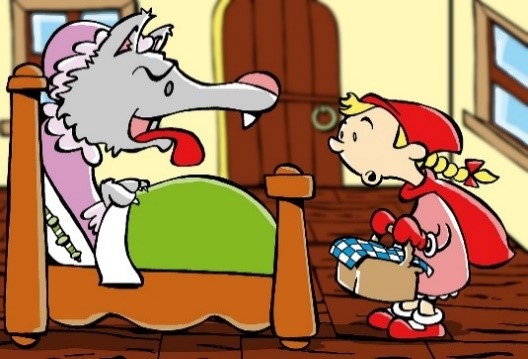
  • develop a strong bond between you and your child,
  • develop his/her visual memory skills,
  • develop strong literacy skills,
  • develop his/her overall confidence.

The more you read to your child, the more enthusiastic about reading s/he becomes.  Reading also helps reduce screen time.


Ms Maria

K 2.2