Teaching Scissors Skills
This is the order in which cutting skills should be introduced to young children.
Ripping paper such as construction paper is the perfect activity for young children to engage in before being introduced to scissors. Children exercise their tripod grasp or their thumb and first two fingers as they grip the paper to rip it.
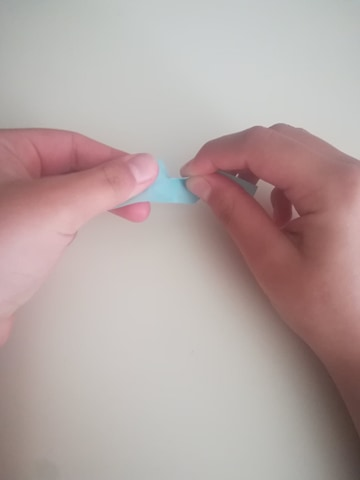
Snipping is the act of opening and closing the scissors one time only which results in successfully cutting something. Snipping will help children develop the muscles in their hands necessary to cut longer lines later so their hands won’t become fatigued.
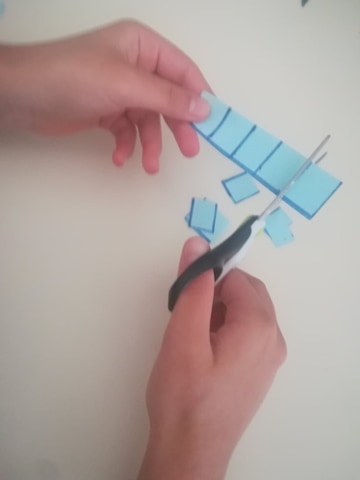
Fringe is repetitive snipping without cutting the paper in half. Use a ruler to draw evenly spaced lines from the bottom of a square piece of green construction paper up two inches. Then, place stickers at the top of each line. Invite children to fringe the paper by cutting on the lines and stopping at the stickers.
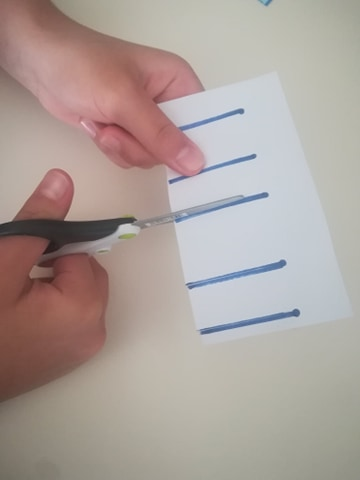
Once children have mastered the first three, then they start working on cutting straight lines from point A to point B. This requires that they open and close the scissors multiple times per cut, which is much more difficult than snipping or fringing.

Next up are zig zag lines. Zig zag lines are more difficult to cut because they require the child to turn the paper or their hand as they cut. This is a much more advanced cutting skill than snipping or cutting straight lines and can lead to hand fatigue quickly. Be sure your kids are ready before introducing zig zag lines.
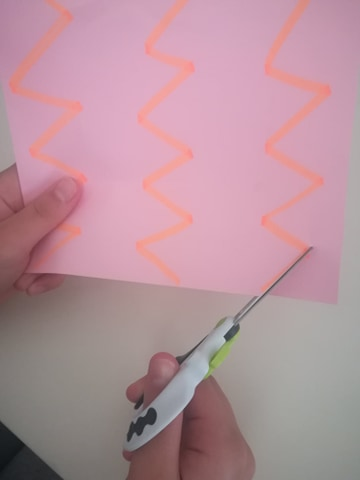
Even more difficult than zig zag are curved lines. These lines can be very tricky for young children to cut, it’s best to wait until they have developed the muscles in their hands to accomplish this challenging task.
How do you know if your kids are ready for curved lines? Observe them ripping, snipping, fringing, and cutting on straight and zig zag lines. If they can do those things, then they may be ready to move on.
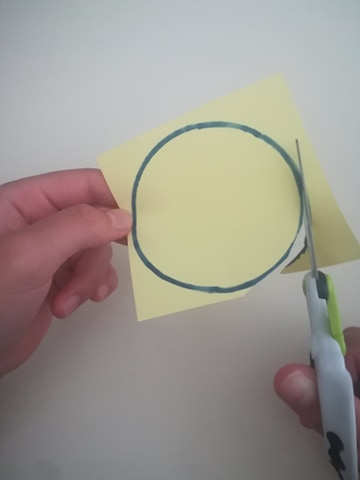
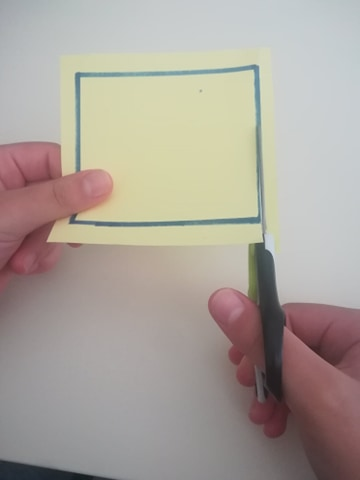
Cutting squares and rectangles can also be challenging for young children. Trying to turn the paper is always challenging and they instinctively try to turn their arms instead. You may need to practice cutting curved and right angles with your children, demonstrating how to hold the paper and turn it as you cut. It will take lots of practice before your children master cutting curved and right angles.
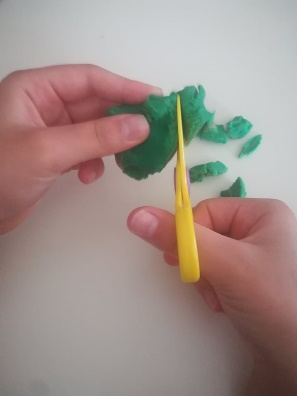
Cutting play dough is also a great way to work on early fine motor skills and is a wonderful cutting activity.
The skills learned within cutting is also preparing your child for writing skills and the manipulation of pencils & crayons.
Ms Natalie
 St Ignatius College, Patri Ġużè Delia, Siġġiewi Primary