- Sink or Float
This play-based learning activity combines a science activity and a water activity. This science experiment is the perfect way to explain density to children at this age.
- Write the words ‘sink’ and ‘float’ on two pieces of paper.
- Fill in two bowls with water and stick the pieces of paper with words ‘sink’ and ‘float’ on the bowls.
- Collect different objects from around the house (objects of varying density) such as teaspoons, paper, pens, plastic cups, keys etc.
- Make sure your child knows the meaning of both the words ‘sink’ and ‘float.’
- Before adding your objects to the water, ask your children to predict which objects they think will sink and which they think will float.
This video is aimed to help children learn about why things float or sink.
https://youtu.be/c8kszaZGLKE
- Magnet Play
- Collect some magnetic and non-magnetic objects from around the house and place them in a bin.
- Invite your child to select an item from the bin. Ask him/her if they think the object is magnetic or not and why do they think so.
(This is a great opportunity for children to learn about making predictions).
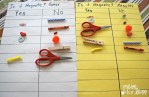
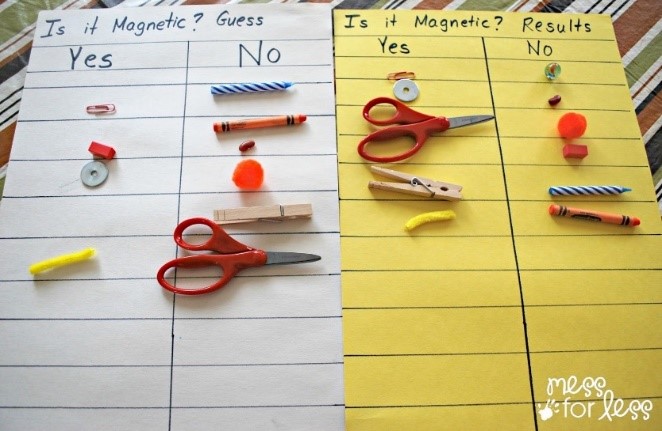
- You can record their predictions on a handout. Sort the objects which they think are magnetic and which not (as seen in the picture).
- Then encourage your child to take a magnet and see which objects are attracted to the magnet and which not. They can check if the predictions they made were correct.
- How many items did they pick up? Encourage them to count the items.
Variation:
A fun way to add movement to your science activity is by using a magnetic wand. The child can go around the house and find magnetic objects with the wand.
Science: A magnet will pull anything that is made of iron, nickel, and some other metals.
- Balloon baking soda science experiment:
1. Blow up a balloon a bit to stretch it out.
2. Using the funnel add two teaspoons of baking soda to the balloon.
3. Pour the vinegar into a plastic bottle, filling it halfway.
4. Carefully attach the balloon to the plastic bottle opening, making sure you fit the balloon properly to have a good seal!
5. Lift-up the balloon and allow the baking soda to fall into the vinegar.
6. Observe the effect of the chemical reaction on the balloon.
Variation:
Before blowing the balloon, the children can use a marker and draw something they like on to it. They will love mixing baking soda and vinegar together inside a bottle to inflate ghosts, monsters or any silly faces they have drawn on balloons.
- Magic milk experiment:
1. Pour some milk into an aluminium foil dish until the milk covers the bottom.
2. Add some drops of food colouring to the milk.
3. Add a drop of dish soap into the centre of the milk. (you can use a cotton bud dipped with some soap)
4. Watch as the colours dance across the surface of the milk.
Enjoy Kids
Ms. Kimberly

 St Ignatius College, Patri Ġużè Delia, Siġġiewi Primary