Kindergarten Activity No 35 – Prepositions

Teaching Prepositions to young children

Prepositions are an important part of the language and help children to create more complex sentences. These are  examples of some prepositions: in, on, at, around, above, near. It is important that children learn these words from a young age so that they can carry out instructions.

Learning about prepositions doesn’t have to be boring. Teach prepositions through playing games and by presenting enjoyable activities so that the children can learn while they have fun.

Children benefit from repetition and from learning in a variety of different ways. When you introduce a new concept make them use all their senses to learn. Use movement, touch, sight, and hearing to teach children. This is called multi-sensory teaching. When they experience learning by using different senses, they learn more easily and retain the information better.

Follow the preposition


For this activity you need:   a box (big enough for your child to go into).

This multisensory game is intended to support the use of prepositions and to help children understand them. It consists of having your child listen to a set of directions and follow them. It involves movement, thus making it more fun and easier for them to learn and remember. Encourage your child to listen attentively to the directions given. This will help him/her develop his/her listening skills.

How to play this game:

  1. Give the child a large box.
  2. Then give him/her directions such as:
  • “Put the box in front of you”
  • “Jump over the box”
  • “Put the box between you and the wall”
  • “Walk around the box”.


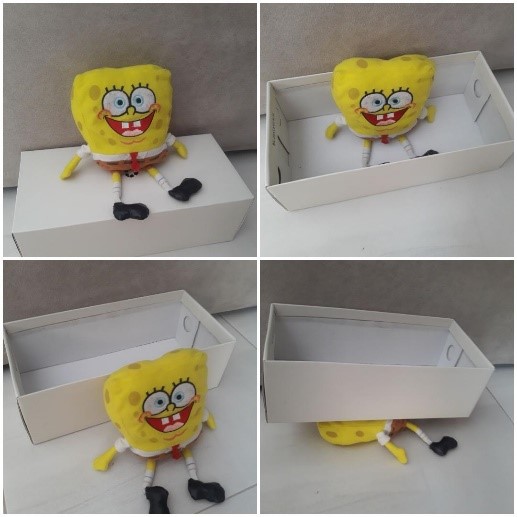
Where does it go?

This is another multisensory activity which involves teaching prepositions through playing a game. It involves real objects, thus making the activity concrete and easier to learn and remember. Once again encourage your child to listen attentively to the instructions given.

To play this game you need:  a toy and a box

How to play this game:

Tell your child that you are going to give him a set of instructions. S/he must listen attentively to these instructions and follow them.

Give him/her directions such as:

  1. “Put the toy on the box”
  2. “Put the toy in the box”
  3. “Put the toy under the box”
  4. “Put the toy next to the box”.

Where is Teddy?

Watch this power point presentation with your child to consolidate learning.

Prepositions Ms Marita

Ms Marita K2.3

Kindergarten Activity No. 34 – Listening Games

Listening Games

Listening skills are critical for speech and language development. We learn language by hearing. Children learn new vocabulary and expand their sentences and grammar all from listening. Poor listening skills might result in difficulties when it comes to following directions, difficulties in learning new words and in constructing grammatically correct sentences. Listening skills help children progress in literacy, for example children need good listening skills to learn the sounds of the letters of the alphabet, which is a basic requirement for learning how to read and write.


Listening involves paying attention to environmental sounds, music, conversations, and stories. Below are five listening activities and games that target the components of listening. The more you practice the more you can help your child develop his/her listening skills.


Game 1: What was that sound?

  1. Ask your child to sit with his/her back to you.
  2. Make an animal sound.
  3. Your child must guess which animal makes that sound.

Variation:

Play this game with real objects too.

  1. Ask your child to sit with his/her back to you. It is important that your child does not see what you are doing. To make the game more fun you can cover his/her eyes with a scarf.
  2. Make a sound, such as shutting a door, switching on the blender, sweeping, shaking keys etc.
  3. Your child must guess which object makes that sound.

Game 2: What sound is missing?

To play this game you need pictures of various animals.

  1. Choose three pictures (for example a cow, a duck, and a pig) and put them on the table.
  2. Tell your child that you are going to make two animal sounds (for example that of the cow and that of a pig), and explain that s/he has to listen carefully to these sounds and find out which animal sound you left out (that of the duck).
  3. Ask your child to tell you which animal sound you left out and to give you its picture/card (in this case the picture of the duck).

Variation: This activity could be played with different musical instruments and other common objects that make sounds, such as keys, paper, etc.

Tip: You can make this game less challenging or more challenging by adding or removing the number of objects/pictures you present or by adding or removing the number of sounds, etc.


Game 3: I spy with my little eye


Describe different objects in the room and have the child guess what they are.


Game 4: Green light, red light


Ask your child to move, run, or jump around the room. When s/he hears red, s/he needs to stop moving, running, or jumping. As soon as s/he hears green s/he starts over again.


Game 5: Did I get it?


Ask your child to tell you a sentence or phrase that he would like you to say. You will then have to repeat exactly what your child said. Your child must then tell you if you said it exactly the way s/he did.

For example:

Parent says: “What do you want me to say?”

Child says: “Keys in the box

Parent says: “Keys in the shoe” (instead of box)

Then ask your child: “Did I get it?”

In this case your child should answer no.


Ms. Maria Camilleri

K 2.2

Kindergarten Activity No. 33 – Sensory Play

Using our senses to learn

The first experiences children have about the world around them is by using their senses. Sensory experiences enhance children’s cognitive development. At school we make sure that we provide children with opportunities to use their senses to learn, since sensory experiences develop and strengthen their cognitive skills.

What’s in the box is a fun sensory game that helps children use their sense of touch and feel to learn about the different feels and textures of objects. This will stimulate their imagination. This sensory activity involves a mystery box. The children must try to guess what the objects inside the box are by using their hands and their sense of touch.

This activity will help children develop their observation skills, increase their verbal communication, and help them practice using other skills they will need for learning.

What’s in the box activity

For this activity you will need:

1. a box

2. a pair of scissors

3. objects to put inside the box

· Cut 2 holes on the sides of the box. Make sure the holes are big enough for your child to fit his/her hand in, but not too big to see what’s in the box.

· Find, from three to four, familiar objects from around the house and put them in the mystery box.

· Ask your child to put his/her hands in the box, grab an object, and try to guess what the object is.

Check for understanding: To promote language growth, ask your child questions such as:

“What do we use this object for?”

or

“Where in the house do we keep this object and why do we keep it there?”

Attached please find the link to help you make the mystery box https://www.youtube.com/watch?v=Ax7ujAm5Gr8

Ms Natalie KGE