Comparing objects by weight
From a young age, it is important that children are exposed to measurement concepts. Measurement concepts play a significant role in the development of the children’s problem-solving skills and help them make sense of the world around them.
It is crucial that children develop the basic concepts of measurement through play. Learning through play helps children learn faster and remember better what they have learnt. An easy and simple way to introduce this concept to your child is by asking him/her to compare weights by holding different objects in his/her hands.
The activities below aim at helping children practice and learn the concept of heavy and light by using concrete objects. The children will be asked to compare to objects based on their weight.
Activity 1: Learning the difference between heavy and light.
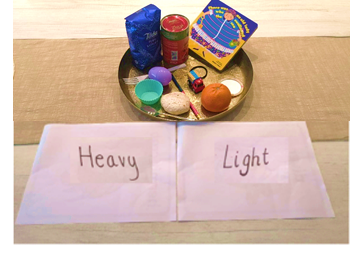
For this activity you will need:
- 2 blank papers. Write heavy on one paper and light on the other paper. (As indicated in the picture)
- Different items to weigh, for example: rock, pencil, cupcake case, spoon, plastic fork, toys, book, tin can.
Instructions:
- Start this activity, by discussing with your child the terms “heavy” and “light”, using an example of each.
For example: use a bag of rice for “heavy” and a pencil for “light”.
- Encourage your child to hold the bag of rice on the palm of one hand, and the pencil on the palm of the other. Ask your child if s/he feels the difference in weight.
- Tell your child to do the same with the other items one by one. Make sure not to choose objects that are close in weight.
- Place the “heavy” items on the heavy paper, and the “light” items on the light paper.
- Once the child places all the items on the appropriate paper, discuss and check whether s/he was correct.
Variations:
- To make this activity more challenging, use a blindfold and tell the child to close his/her eyes when weighing the objects.
- Encourage your child to find more heavy and light objects from around the house and compare their weight.
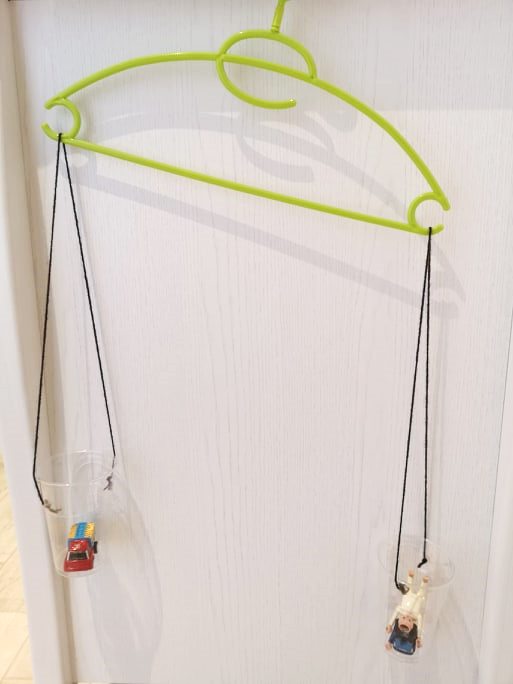
Activity 2: Building a balance scale from a clothes hanger
For this activity you will need:
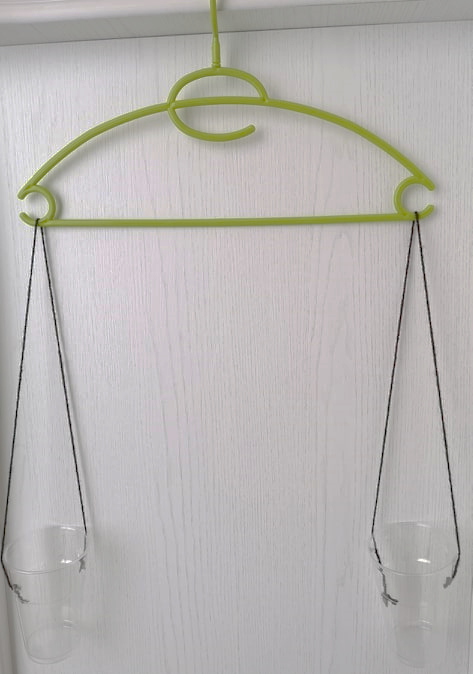
- A plastic hanger
- Two identical paper or plastic cups
- 2 pieces of string/yarn (of equal length)
- A Hole Punch
Instructions:
- Cut two pieces of string of the same length. After cutting the string measure them and make sure they are of the same length.
- Make two holes, very close to the rim, on each side of the two cups.
- Tie the end of the string to both cups. The string should support the cups like the handle of a bucket.
- Hang the hanger in a place where it can easily swing. It is important that it is reachable for the child.
- Hang the cups to the hanger.
- Encourage your child to balance the hanger to make sure the cups are hanging at the same level. If the strings are not at the same level, adjust the strings until they are even.
Once the balance scale is done, encourage your child to look for different objects around the house. Make sure the objects fit in the cups.
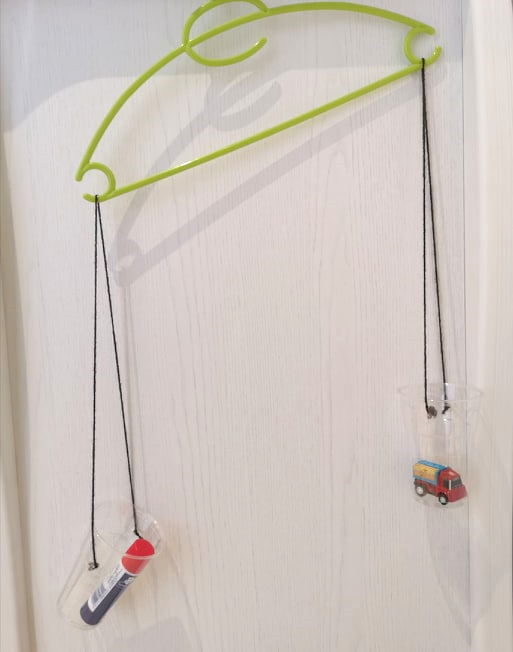
Before putting the objects in the cups, encourage him/her to predict the weight of the objects. Have your child experiment by putting the different objects in the cups. Ask questions such as:
- Which cup has the heavier item in it?
- Which cup has the lighter item in it?
- Why does one cup stay up while the other goes down?
Activity 3: Lighter or Heavier? Game
This interactive game will help the children practice comparing the weight of different objects:
Enjoy
Ms Rodianne – K2.1
 St Ignatius College, Patri Ġużè Delia, Siġġiewi Primary